Local Men’s Wellness, Sports & Accessibility
U.S. Open adaptive surfing starts in Oceanside; check heat and access before you go
The September 10–13 championship is listed as on at Oceanside Pier. Athletes and visitors should verify the live schedule, beach access and heat conditions before traveling.
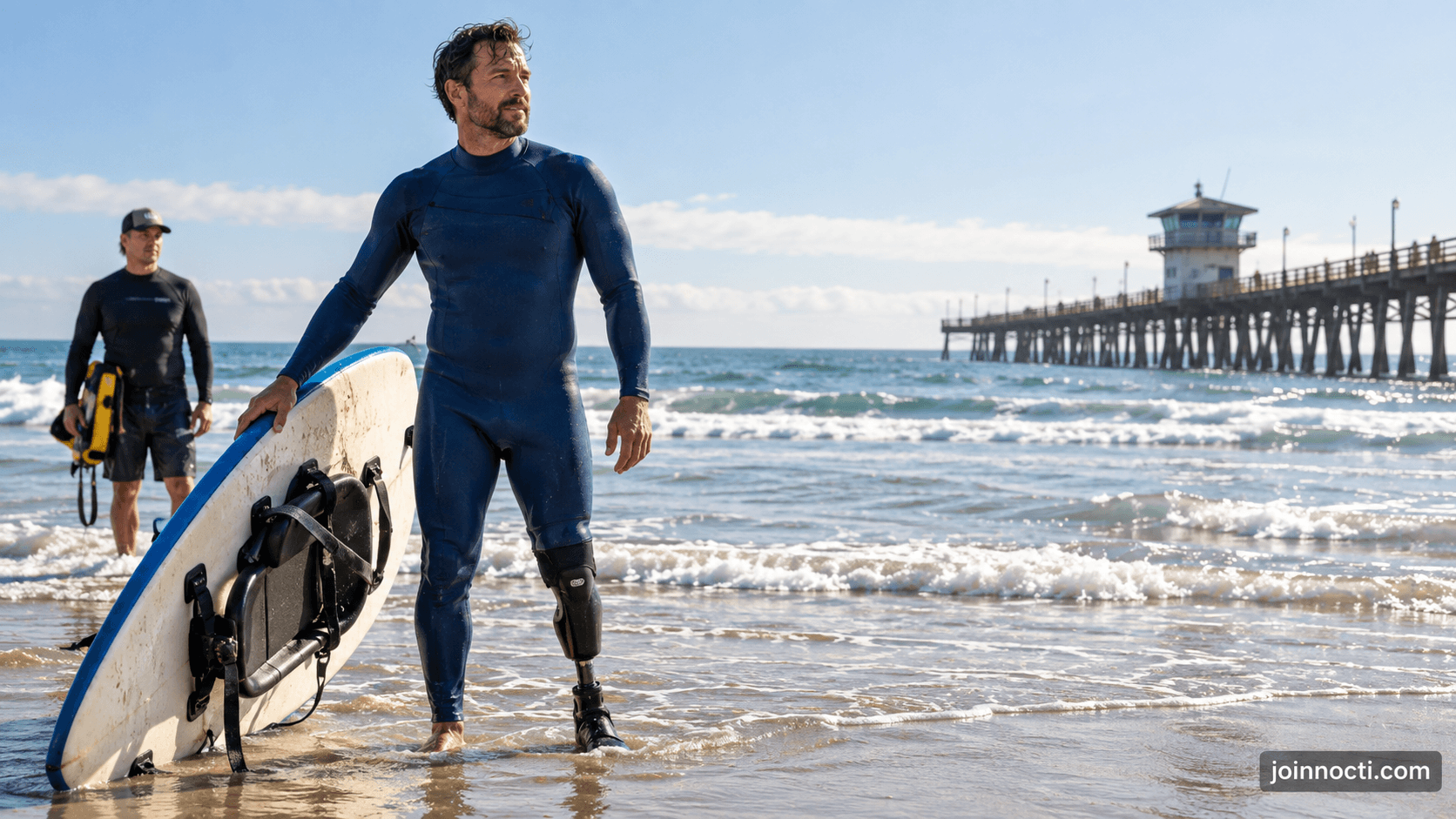
The organizer says the four-day championship is on
The U.S. Open Adaptive Surfing Championships begins Thursday, September 10, on the north side of Oceanside Pier and runs through Sunday, September 13. The event’s official site currently says the championship is “ON” for those dates. Visit Oceanside independently lists the same four-day window and places the event at Oceanside Pier, 300 N. The Strand. Those live listings establish the planned dates and place; they do not guarantee that every heat, clinic or ceremony will happen at a fixed time if surf, weather or operations change.
This is elite competition—not a generic drop-in surf session
The Association of Adaptive Surfing Professionals lists Oceanside as the final 2026 stop on its World Championship Tour. The event organizer says world champions will be crowned across nine divisions, while AASP says competitors must hold a single-event or annual membership to enter a tour event. The championship website links to a registration system, but it does not publish a simple public day-by-day spectator timetable on its main page. Anyone traveling for a particular athlete, division or clinic should use the organizer’s live page and contact information rather than relying on a screenshot or an old schedule.
A surf class describes competitive impact, not the whole person
AASP’s 2026 classification manual says the system accounts for differences in physical and visual impairments that affect surfing performance. It also gives event personnel authority to assess an athlete’s disability, equipment, skill and competition experience and to recommend added equipment when safety requires it. Those rules organize a fair and safer contest; they are not a diagnosis, a measure of independence outside the water or permission to make assumptions about an athlete’s needs. Ask the person directly before offering physical help, moving equipment or speaking to a companion on the person’s behalf.
Adaptive equipment and trained support are part of the design
Stoke for Life describes adaptive surf and paddle clinics, equipment education and hands-on volunteer instruction as part of its broader mission. The championship site says support includes teaching volunteers to handle people with different disabilities safely in and out of the water. That language is not a promise that a clinic is available at every hour of this four-day event. Prospective participants or volunteers should confirm the specific program, eligibility, equipment, staffing and meeting point with the organizer before arriving.
Beach access starts before anyone reaches the water
The City of Oceanside says sand-friendly beach wheelchairs can be borrowed at Lifeguard Headquarters below the pier on a first-come, first-served basis in exchange for an ID. Visit Oceanside advises calling ahead at 760-435-4018 and gives the headquarters address as 301 The Strand N. The city also notes nearby street and lot parking. A city wheelchair is a general beach-access resource, not a reserved event service, and availability does not establish that every route, viewing area, restroom or transfer setup will meet one person’s needs. Confirm the details that matter to you before leaving home.
A countywide heat warning remains active despite a milder pier forecast
At 11 a.m. Thursday, the National Weather Service had an Extreme Heat Warning in effect for the coastal zones of San Diego and Orange counties through 8 p.m. The alert described temperatures in the 80s at beaches and the mid- to upper 90s on higher coastal terrain. The NWS point forecast near Oceanside Pier called for a high near 82°F with a light south wind. Both can be true: a zone warning covers varied terrain, while a point forecast estimates conditions near one coordinate. A live event listing is not a weather clearance, so recheck the organizer, the point forecast and active alerts before each trip.
“Rehabilitative” language needs a careful boundary
Stoke for Life says its programs raise awareness of the rehabilitative benefits of adaptive water sports. That is the organization’s description of its mission, not evidence that watching or joining one session will treat an injury, improve a specific condition or replace physical or occupational therapy. Athletes should use their established medical, rehabilitation and coaching guidance when relevant. Massage and routine recovery services may support comfort or training goals within a provider’s scope, but they do not evaluate new neurological symptoms, a suspected injury, heat illness or an emergency.
Make four checks before heading to the pier
First, confirm that the organizer still lists the event and the division or activity you want to see. Second, check current NWS alerts and the Oceanside Pier point forecast—not a forecast for an inland San Diego neighborhood. Third, call about the beach wheelchair or ask the organizer about the access feature, support person, equipment or quiet space you need. Fourth, keep heat illness and ocean risk separate from event enthusiasm. Confusion, slurred speech, loss of consciousness or seizures in the heat require 911; follow lifeguards and event water-safety staff around the surf. NOCTI publishes this as educational local service journalism, not medical advice or a claim that a NOCTI provider is affiliated with the championship.
Sources
- U.S. Open Adaptive Surfing Championships: official 2026 event status and organizer information ↗
- Stoke for Life Foundation: September 10–13 Oceanside event page and program mission ↗
- Association of Adaptive Surfing Professionals: 2026 tour dates and competitor membership requirement ↗
- Association of Adaptive Surfing Professionals: 2026 classification and water-safety manual ↗
- Visit Oceanside: September 10–13 event listing, pier address and organizer contact ↗
- City of Oceanside: pier access, parking and first-come beach-wheelchair information ↗
- National Weather Service: active alerts for the Oceanside Pier area ↗
- National Weather Service: current forecast near Oceanside Pier ↗
- CDC/NIOSH: heat-related illness signs and emergency response ↗
Find men's massage near you
Compare local providers privately and contact the professional you choose directly.
Search NOCTI