Local Men's Wellness & Service Trends
Para Pan Pacific meet closes in Walnut—and puts accessible recovery in focus
The international meet ended Sunday at Mt. SAC after three days of racing. Its operating rules offer a useful standard for asking about accessible, athlete-led recovery services.
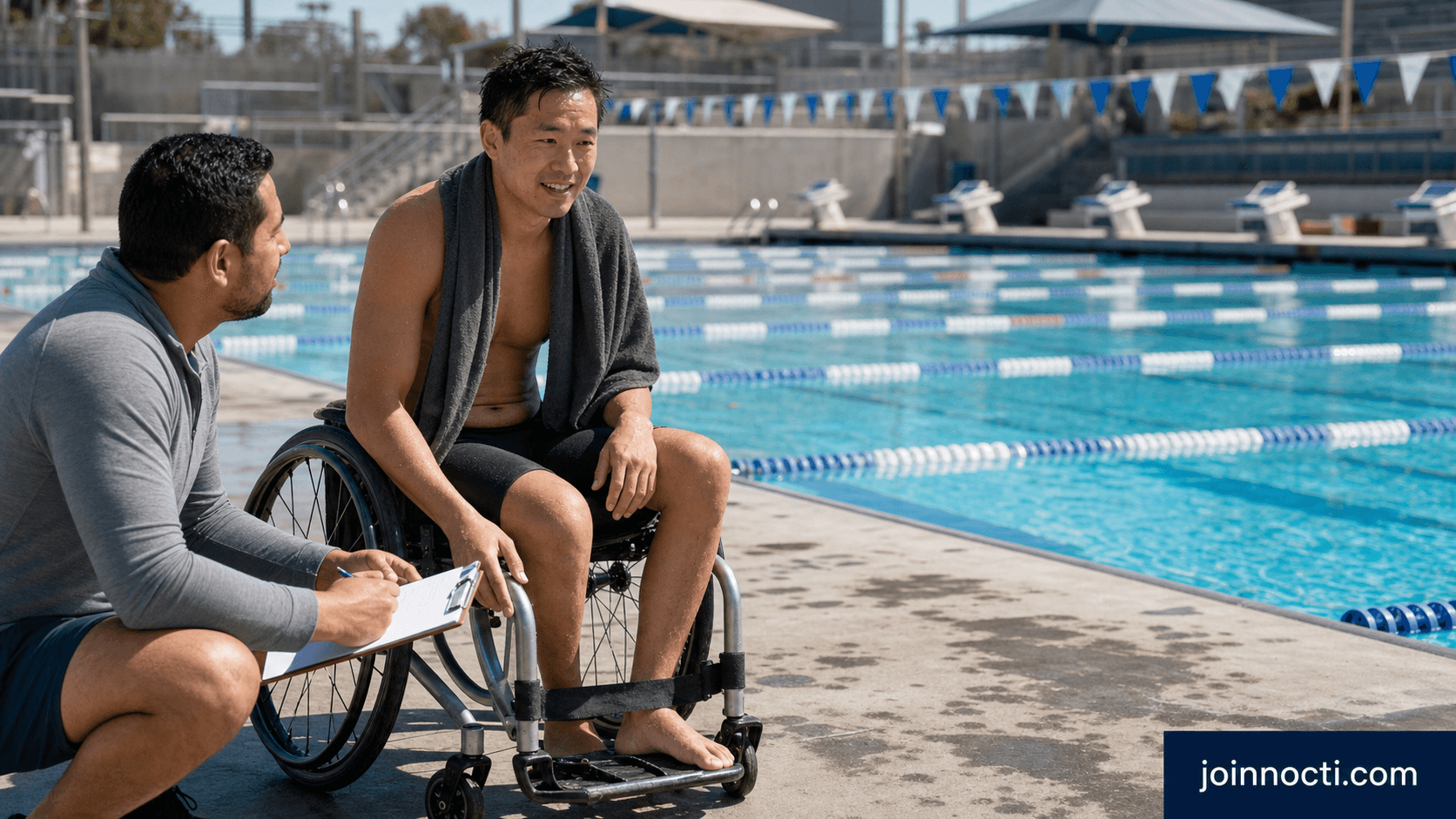
Three days of international racing in Los Angeles County
The 2026 Para Pan Pacific Swimming Championships concluded Sunday, August 30, after three days at the Mt. SAC Aquatics Center in Walnut. U.S. Paralympics Swimming designated the meet a World Para Swimming Approved Plus competition, with races in an outdoor 50-meter pool and a separate warm-up and cool-down pool. The event brought a major adaptive-sports program to eastern Los Angeles County; it did not take place in Irvine, where the separate Pan Pacific Swimming Championships were held earlier in August.
One result that stood out
On the second night, Japan’s Naohide Yamaguchi won the men’s SB14 100-meter breaststroke in 1 minute, 2.38 seconds. The official meet-manager results list the time, and the Japanese federation for swimmers with an intellectual disability reported it as a world record. Those sources establish a specific result without implying that every class can be compared by raw time or that one performance represents every athlete at the meet. Final-day results were still being assembled across participating organizations when this article was prepared.
What the letters and numbers mean
Para swimming uses sport classes so the impact of an eligible impairment on swimming performance can be assessed within the sport’s rules. World Para Swimming says S applies to freestyle, backstroke and butterfly, SB to breaststroke and SM to individual medley. S and SB classes 11 through 13 cover vision impairment, while S/SB14 covers intellectual impairment. A class is not a diagnosis, and swimmers may have different S and SB numbers because breaststroke places different demands on the body.
Recovery support was part of the event plan—not a free-for-all
The meet packet allowed credentialed sports-medicine providers to perform therapeutic and recovery modalities or manual therapy only for their own athlete or team, in a designated treatment area and within the provider’s professional scope. It also listed massage therapists among possible accredited support staff. That is an event rule, not an endorsement of any commercial massage or recovery provider. The useful principle for everyday appointments is narrower: know who is providing the service, what training or credential applies, what the service is intended to do and where the provider’s scope ends.
Questions to ask before an accessible recovery appointment
Accessibility is more than a checkbox. Before booking, describe only the access needs you want the business to plan for and ask about the route from arrival to the treatment area, door and room clearance, table or chair options, restroom access, transfer assistance, communication preferences, privacy and whether a support person can join you. Ask the provider to explain any positioning or technique change before it happens. A clear answer is useful; assumptions about what a disabled client can or cannot do are not.
Consent and athlete control stay central
A disability does not create blanket permission to move a mobility device, help with a transfer, touch a body area or speak to a companion instead of the client. Agree on the goal and boundaries of the session directly with the person receiving it, and revisit consent when positioning or technique changes. The client can pause or end the service. Providers should be candid when they lack the equipment, training or environment needed to serve a request safely rather than improvising beyond their competence.
Know when recovery services are not the answer
Massage, stretching and other wellness services do not diagnose an injury or replace medical or rehabilitation care. An athlete with new severe pain, breathing trouble, chest pain, fainting, a suspected head or spinal injury or another emergency needs appropriate medical help; call 911 for an emergency. For a non-emergency concern, ask a qualified clinician or the athlete’s established care team whether a service or position is appropriate. NOCTI helps adults compare independent providers, but it does not certify accessibility or direct medical care.
Why this local event matters after the medals are packed away
The Walnut meet offered a concrete picture of recovery as part of a larger system: trained personnel, athlete-safety rules, defined access, credentialing and limits on who could provide care. Local gyms, massage practices and recovery businesses are not championship venues, but disabled customers can still expect specific answers and respectful communication. NOCTI is covering the meet because that service standard has lasting value for Los Angeles County residents; the article does not claim that any listed NOCTI provider worked at the event.
Sources
- U.S. Paralympics Swimming: 2026 Para Pan Pacific Championships event page ↗
- U.S. Paralympics Swimming: official event information and meet packet ↗
- Official meet-manager results: Day 2 finals (August 29, 2026) ↗
- Japan federation: Yamaguchi breaststroke result and world-record report ↗
- World Para Swimming: para swimming classification explained ↗
Find men’s massage near you
Compare local providers privately and contact the professional you choose directly.
Search NOCTI