Men’s Travel, Wellness & Recovery
Thanksgiving Travel Recovery for Men: Flights, Road Trips and the Hotel Reset
Long flight, long drive, one small toiletry bag. Use this practical Thanksgiving travel checklist for movement, sleep, grooming and a safer post-trip reset.
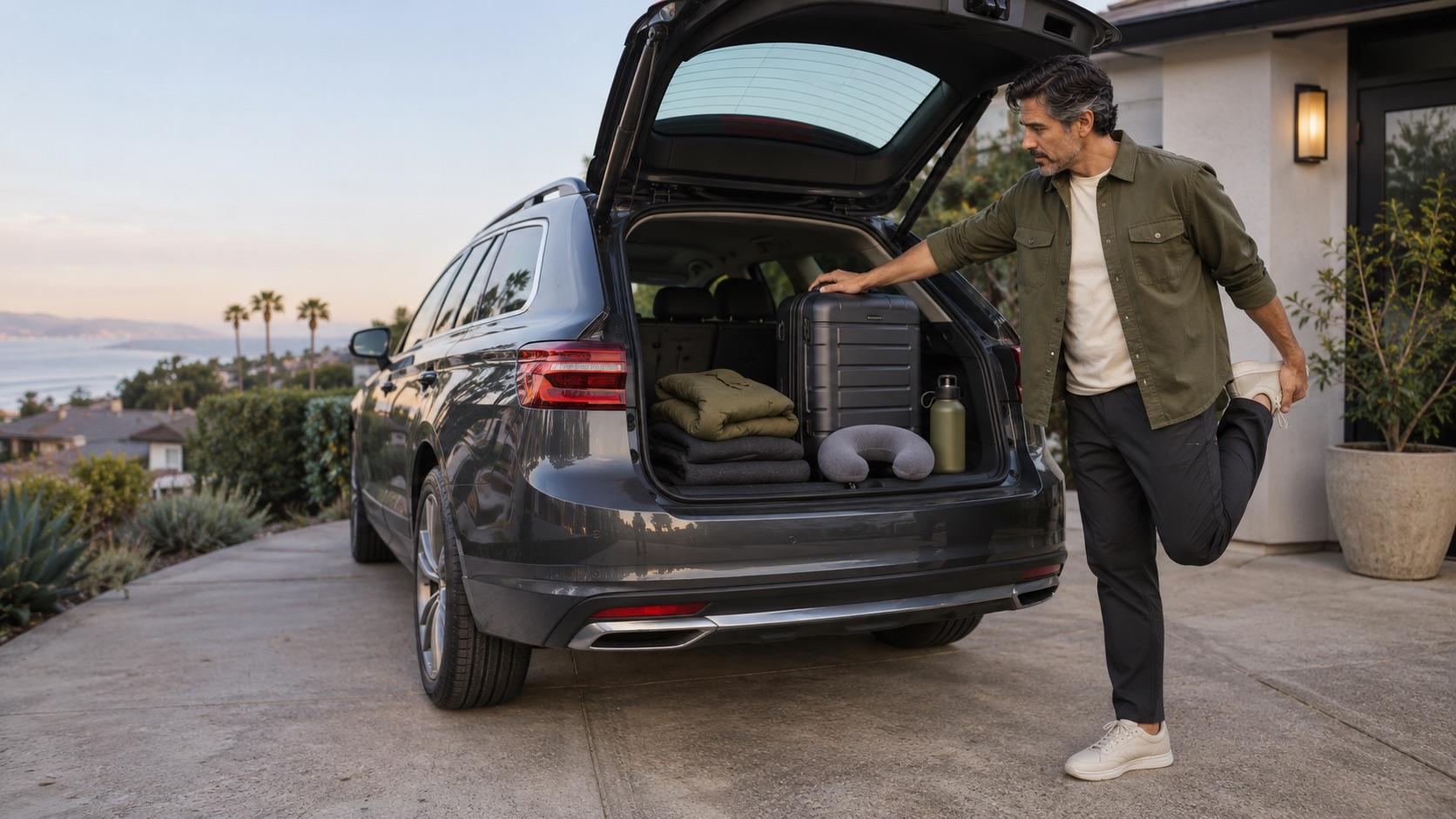
Your carry-on has a system. Your body deserves one too.
Thanksgiving falls on Thursday, November 26, 2026. Somewhere between the airport line, the freeway and the pullout sofa, “holiday travel recovery for men” can turn into a frantic search for anything that promises to fix a stiff back by dinner. Start earlier. Long trips ask the body to sit still, sleep strangely and carry more than usual. The useful plan is not a miracle gadget or a punishment workout after landing. It is a sequence: move during the trip, pack what you will actually use, know the warning signs that are not ordinary stiffness and book professional care only when the service fits.
Four hours is the line worth noticing—not panicking about
The CDC says travel longer than four hours by plane, car, bus or train can raise the risk of a blood clot because of prolonged sitting. It also says the overall risk is generally very small for most travelers and rises when other risk factors are present, including a previous clot, recent surgery or injury, active cancer, limited mobility and certain medical conditions. That balance matters. Do not turn every tight calf into a diagnosis, and do not dismiss a new symptom because the trip is over. During long travel, move your legs frequently, flex the ankles and take opportunities to stand or walk when it is safe. The CDC advises travelers with additional risk factors to discuss prevention with a clinician rather than inventing a compression-sock or medication plan from social media.
For a road trip, sleep is safety equipment
The most expensive travel accessory is a driver who is too tired to continue. NHTSA says adequate daily sleep is the only true protection against drowsy driving and recommends seven to eight hours a night. Alcohol adds to sleepiness, and prescription or over-the-counter medicines may also cause drowsiness. Coffee is not a substitute for sleep. NHTSA warns that a seriously sleep-deprived driver can still experience microsleeps after caffeine. Build stops into the route, change drivers when possible and pull over safely if alertness drops. California travelers can check Caltrans QuickMap for current road conditions, closures and traffic before leaving; it is a real-time road-information tool, not a promise that the freeway has developed manners.
Pack the grooming kit you can explain at security
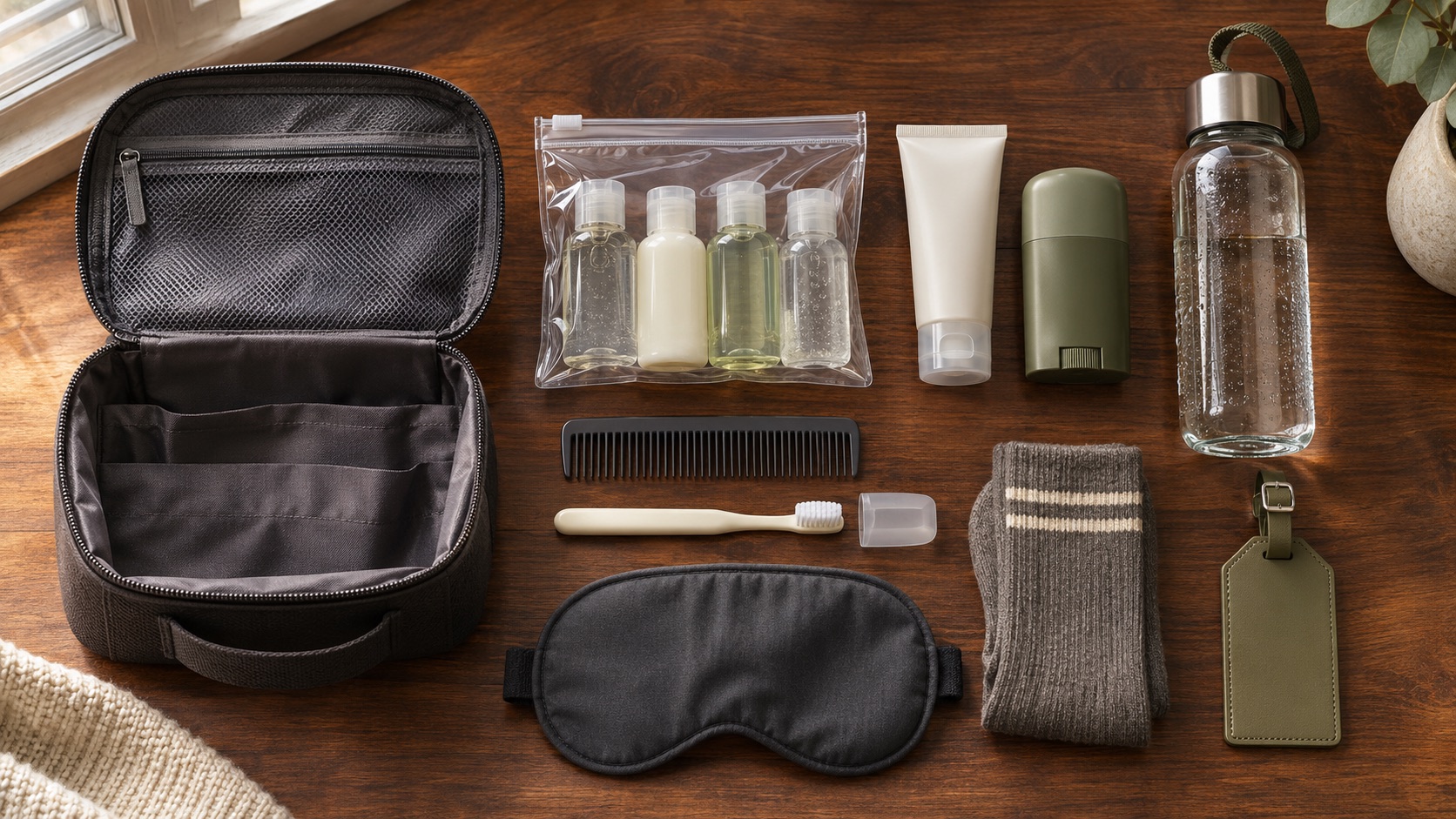
A travel grooming kit should be smaller than your anxiety about forgetting something. TSA’s carry-on rule limits liquids, gels and aerosols to containers of 3.4 ounces or less, all fitting inside one clear quart-size zip-top bag, with one bag per passenger. FAA guidance adds separate quantity and packaging rules for certain medicinal and toiletry aerosols, including protected caps. Pack the basics you already tolerate: toothbrush, deodorant, comb, moisturizer, shaving or beard items and any personal-care product you know you will use. Check unfamiliar aerosols, batteries and grooming tools in TSA’s “What Can I Bring?” database and the FAA PackSafe chart before the airport, not while the security line studies your choices. Keep prescriptions in the form and packaging recommended by your clinician, pharmacy, airline and destination rules.
Travel movement should be boring enough to repeat
The goal during a long trip is not to turn Gate 42 into a boot camp. Use ordinary movement you can control: ankle pumps while seated, a walk during a safe stop and a position change before the body starts negotiating. Follow crew instructions on a plane and never walk around when the seat-belt sign or conditions make it unsafe. For a drive, plan the stop before stiffness or fatigue makes the decision. A short walk, restroom break and driver change can serve several needs without requiring a foam roller in a gas-station parking lot. If you use mobility aids, have a recent injury or have been told to limit activity, ask your clinician for a travel plan suited to you. Generic stretches are not a substitute for individual restrictions.
Holiday photos do not require a bathroom-counter reinvention
Travel can make familiar skin and hair routines feel inconvenient. That is not an invitation to test a new peel, aggressive scrub, beard dye or mystery sample the night before the family photo. Bring products you already use, keep the routine simple and follow the label. If a product causes a significant reaction, stop using it and seek appropriate advice rather than layering on more products. If you need a haircut, beard cleanup, facial or waxing appointment at the destination, book by service—not by a vague promise to make you “photo ready.” Confirm who performs it, the total price, preparation and aftercare. First-time or major changes deserve more time than the hotel mirror suggests; NOCTI’s separate holiday-grooming timeline covers that decision in detail.
Jet lag is a clock problem. A massage is not a clock.
If your trip crosses several time zones, the CDC describes jet lag as a mismatch between your usual daily rhythm and the destination time. It recommends shifting sleep gradually when practical, following the destination schedule after arrival, using light strategically, limiting alcohol and keeping daytime naps short. A recovery appointment cannot reset the body clock. For ordinary travel tightness, a gentle walk, normal meal, water, shower and sleep may be the least glamorous and most sensible first night. If you want massage or assisted stretching, decide whether you are alert enough to answer intake questions and give useful feedback. “I landed twenty minutes ago and have not slept since Tuesday” is information, not a challenge for the deepest pressure available.
Should you book massage before or after the trip?
There is no universal best day. A familiar appointment before departure may help you enter the trip feeling less rushed. An appointment after arrival may feel appealing when ordinary sitting-related tightness is the issue. Either way, the provider needs the real context: travel duration, recent injury or surgery, new symptoms, medications that affect bruising or clotting, and what you expect from the session. NCCIH says massage should not be used to postpone seeing a healthcare provider about a medical problem. It also notes that serious adverse effects are rare but have been reported, particularly with vigorous techniques or people at higher risk. A responsible professional can adjust or decline a service. They cannot diagnose a blood clot from a booking message.
| Situation | Useful first step | What not to assume |
|---|---|---|
| Long flight or drive with no concerning symptoms | Move when safe, eat, hydrate, shower and sleep before adding more plans | That the deepest massage is automatically the best reset |
| Known higher risk for blood clots | Discuss prevention and travel timing with a qualified clinician before departure | That generic compression gear or aspirin is right for you |
| Ordinary tightness and you want bodywork | Share travel duration, health history and goals; choose a service you understand | That the provider can diagnose the cause of pain |
| New one-sided swelling, warmth, redness or unexplained pain | Seek prompt medical advice | That it is merely a knot to massage |
| Chest pain, trouble breathing, coughing blood, fainting or severe symptoms | Get emergency medical help immediately | That a wellness appointment or online guide can evaluate it |
This table is a planning aid, not diagnosis or individualized medical advice. Follow emergency instructions where you are traveling.
One sore leg is not a hotel-spa problem until a clinician says it is
The CDC lists swelling, unexplained pain or tenderness, warmth and redness or discoloration—usually in a leg or arm—as possible signs of deep vein thrombosis. Difficulty breathing, chest pain, a fast or irregular heartbeat, coughing blood, lightheadedness or fainting can signal a pulmonary embolism and require immediate medical help. If those symptoms appear, do not massage the area, “walk it off” or wait for a wellness appointment to decide what it is. Seek appropriate medical care. A directory, trainer, massage therapist and travel article cannot rule out DVT or pulmonary embolism. The correct recovery plan begins with the correct level of care.
The hotel reset should reduce decisions
Before leaving home, choose the first-night plan: where you will eat, what time you want lights out and whether any appointment is genuinely necessary. Confirm a professional’s actual location, service setting, total price, cancellation terms and hotel or travel fee before sharing a room number or paying a deposit. Do not post the room number, booking messages or private address publicly. If the provider travels, ask what they bring, what the hotel requires and what space is needed. If the service is studio-based, check the return route before agreeing to a late appointment. “Available near the airport” can still mean a cross-county relationship with traffic. Travel convenience is useful only when the details are real.
The NOCTI verdict: arrive with a plan, not a repair fantasy
Thanksgiving travel does not need to become a wellness performance. Move during long sitting, do not drive drowsy, pack a compliant grooming kit and give your first night fewer obligations. If you choose professional bodywork, grooming or fitness support, compare the service and communicate the travel context before booking. The objective is not to arrive looking untouched by transportation. It is to arrive safe, present and recognizable in the group photo. The cranberry sauce can handle the drama.
SourcesU.S. Office of Personnel Management: Thanksgiving Day on November 26 in the 2026 federal holiday schedule, CDC: long-distance travel +6 more
- U.S. Office of Personnel Management: Thanksgiving Day on November 26 in the 2026 federal holiday schedule ↗
- CDC: long-distance travel, blood-clot risk, movement guidance and warning signs ↗
- CDC Travelers’ Health: jet lag preparation and adjustment guidance ↗
- NHTSA: drowsy-driving risks and alert-driving guidance ↗
- Transportation Security Administration: travel checklist and 3-1-1 liquids rule ↗
- Federal Aviation Administration: PackSafe guidance for medicinal and toiletry articles ↗
- Caltrans: QuickMap, highway conditions, closures and traveler information ↗
- National Center for Complementary and Integrative Health: massage therapy uses, limits and safety ↗
Travel changes the setting. Your standards should travel too.
Use NOCTI to compare independent massage, bodywork and recovery profiles. Confirm the actual service, price, setting, availability and health screening directly with the professional before booking.
Explore Body & Wellness