HEALTH / Diabetes Device Safety
Tandem Mobi Recall: Does Your Pump Need Replacement?
FDA says all Tandem Mobi pumps covered by the recall need updated alarm precautions, but only pumps on the serial-number list should be replaced. Here is how to find your branch of the recall without dismissing an alarm, improvising insulin or assuming every Mobi is being removed.
The quick answer
FDA says all Tandem Mobi insulin pumps in this recall need updated alarm precautions, but only serial numbers on the agency’s replacement list require return and replacement. Check your pump against that list, respond to every occlusion alarm, monitor glucose and keep the backup delivery plan your diabetes team gave you.
What did FDA confirm on November 25?
The U.S. Food and Drug Administration posted the recall as its most serious type on November 25. Tandem had already emailed customer letters on September 23, so this is a newly confirmed federal recall notice—not evidence that the company first discovered the issue yesterday.
FDA’s enforcement record lists 80,938 pumps in commerce, including 77,559 in the United States and 3,379 outside the country. The action is still ongoing. The FDA page reports 1,248 serious injuries associated with the issue as of October 28 and no deaths.
That injury number is serious, but it should not be inflated into a claim the source does not make. FDA does not say every report was a hospitalization, that 1,248 unique people were hospitalized or that every Mobi user will experience the malfunction.
Does every Tandem Mobi need replacement?
No. FDA describes all Tandem Mobi Insulin Pumps with Interoperable Technology as affected, then splits the action by serial number.
If your serial number appears in FDA’s linked replacement spreadsheet, Tandem says to request a return and replacement immediately through its recall channel or technical support at 877-801-6901. If the number is not listed, FDA says you may continue using the pump while following updated alarm precautions.
That is the whole plot twist: affected does not always mean removed. In device recalls, a company can remove one subset while correcting instructions for the rest. A headline that drops the second half is medically unhelpful click confetti.
| Your pump | FDA/Tandem instruction | What not to conclude |
|---|---|---|
| Serial number appears on the replacement list | Request return and replacement immediately; follow alarm, glucose-monitoring and backup-plan instructions while it remains in use | Do not quietly keep using it as if the replacement notice were optional |
| Serial number is not on the replacement list | Continue use with the updated instructions; respond to alarms, enable app notifications and contact support for repeated or disruptive alarms | Do not assume an unlisted pump can ignore every occlusion alarm |
The phrase “all Tandem Mobi pumps are affected” describes the instruction update. It does not mean all 80,938 pumps in commerce are on the replacement list.
Why can a false occlusion alarm interrupt insulin?
Tandem told FDA that increased friction inside the drive module can reduce available motor power. Under some conditions, the motor speed drops below the pump’s occlusion-detection threshold even when no real flow obstruction exists.
The pump then treats the event as an occlusion and suspends insulin delivery. Delivery stays suspended until the user acknowledges the alarm and resumes therapy. Repeated interruptions can raise blood glucose; severe hyperglycemia may require medical treatment or hospitalization.
The mechanism explains why the alarm matters even when the tubing looks fine. It does not prove a specific alarm is false. Real blockages, damaged tubing, cartridge trouble or infusion-site problems remain possible, so the user-guide check still comes first.
What should a listed-serial-number user do?
1. Confirm the serial number against the replacement file linked on FDA’s page.
2. Contact Tandem through the replacement route or call 877-801-6901 immediately. Do not post the serial number publicly; it is a device identifier, not a group-chat icebreaker.
3. Until replacement, follow the instructions attached to your device and care plan. FDA says to acknowledge an occlusion alarm, inspect the cartridge, tubing and infusion site, correct any identified condition and resume insulin delivery.
4. Enable pump-alert push notifications in the Tandem Mobi app and keep checking glucose for unexpected highs or lows.
5. Keep the backup insulin-delivery method your healthcare professional has prescribed and taught you to use. The recall is not permission to invent a dose or borrow someone else’s supplies.
What if the serial number is not listed?
FDA says unlisted Mobi pumps may continue to be used with updated instructions. Respond to every occlusion alarm, inspect the delivery path, resume therapy as instructed and enable app notifications.
Contact Tandem Customer Support if alarms become unusually frequent, continue after troubleshooting or repeatedly disrupt therapy. The FDA notice also says to be ready to use a backup method as directed by your healthcare provider.
“Not on the replacement list” means follow the correction branch. It does not mean the device is outside the recall, that every future alarm is harmless or that the app can substitute for checking glucose.
What does a backup method actually mean?
A backup method is a plan made before the pump stops cooperating. Tandem’s safety information says that, at minimum, the emergency kit should include an insulin syringe and vial or a prefilled insulin pen. Your own care team must define which insulin, when to use it and how much.
Also keep the supplies your plan requires to check glucose and ketones. The American Diabetes Association recommends a personal ketone-management plan because the correct trigger and action can vary by age, care setting and individual instructions.
The useful distinction is equipment versus protocol. Owning a pen is not the same as knowing the correct backup dose. The recall gives you a reason to verify both while the phone line is quiet—not during a 2 a.m. alarm opera.
When does high glucose become urgent?
Follow the emergency thresholds and correction plan your diabetes team gave you. The Centers for Disease Control and Prevention says a clogged pump or missed insulin can contribute to diabetic ketoacidosis, a life-threatening emergency caused by too little insulin and rising ketones.
CDC advises emergency care for high ketones or DKA warning signs such as vomiting, trouble keeping fluids down, fruity-smelling breath, fast or difficult breathing, confusion or multiple rapidly worsening symptoms. If you cannot access insulin or your delivery system is not working, the American Diabetes Association also advises immediate help.
This article cannot determine whether an alarm, glucose reading or symptom is an emergency for one person. Use your prescribed plan, contact your care team or pump support promptly, and call 911 for a life-threatening emergency.
Could some alarms still be ordinary occlusions?
Yes. A real obstruction can trigger the same alarm. The user guide tells people to inspect the cartridge, tubing and infusion site and to follow their healthcare professional’s instructions for possible or confirmed occlusions.
That competing explanation matters because “false-positive recall” can tempt users to dismiss every alert as hardware drama. The safer interpretation is conditional: repeated alarms with no found blockage may fit the recalled failure mechanism, but each alarm still stops delivery and deserves the prescribed response.
Another limitation: the federal notice does not tell us how many current users have never had an alarm, how many replacement-listed pumps remain in use or how long each replacement will take. It provides an action map, not a personal forecast.
How is this different from the 2025 Tandem recall?
FDA separately recalled certain t:slim X2 pumps in 2025 over faulty speaker wiring that could allow an alarm condition to stop insulin while audible alerts failed. The November 2026 Mobi action concerns false-positive occlusion detection and a serial-number split between replacement and updated instructions.
Both cases make alert awareness and backup planning important, but the product, mechanism and affected identifiers differ. Old search results can therefore be actively unhelpful. Match the device name, notice date, serial number and failure description before following any recall instruction.
What is known, inferred and still unknown?
Known: FDA identifies this as the most serious recall type; all Tandem Mobi pumps covered by the action receive updated precautions; only listed serial numbers are subject to replacement; false-positive occlusion alarms can suspend delivery; 1,248 serious injuries and no deaths were reported as of October 28.
Inferred: confusion will cluster around whether “all affected” means “all replaced,” because the same notice uses both a broad affected-product line and a narrower replacement file. That is an information-design problem, not a measured survey finding.
Unknown: how many listed pumps remain with users, how many injury reports represent distinct individuals, the distribution of outcomes inside the reported total, individual replacement timing and whether a particular alarm is false without troubleshooting and device review.
Your five-minute recall checklist
1. Find the pump’s serial number without sharing it publicly.
2. Open FDA’s November 25 recall page and use its linked replacement list.
3. Follow the listed or unlisted instruction branch exactly.
4. Turn on app notifications, but keep direct glucose checks and pump alarms in the plan.
5. Put Tandem support, your diabetes team, backup delivery supplies and ketone supplies in one reachable place.
6. Review the emergency signs in your personal plan before a holiday, flight or overnight trip.
7. Report device problems to Tandem and FDA MedWatch; a report helps regulators see the pattern, but it is not a substitute for urgent care.
Frequently asked questions
Are all Tandem Mobi pumps recalled? FDA includes all Tandem Mobi pumps in the correction, but only serial numbers on the linked list require replacement.
Can I keep using an unlisted pump? FDA says yes, with the updated alarm, notification, glucose-monitoring, support and backup-plan instructions.
What if my pump has repeated occlusion alarms? Follow the user-guide steps and contact Tandem Customer Support, especially when alarms persist after troubleshooting or repeatedly disrupt therapy.
Should I stop insulin while I wait? Do not improvise. Follow your prescribed diabetes plan and contact your care team or Tandem for the device-specific next step.
Did the recall cause deaths? FDA reports no deaths associated with the issue as of October 28.
Is the smartphone notification enough? No. It is an additional alert route; FDA still tells users to respond to pump alarms, monitor glucose and maintain a backup method.
Editorial and image note
Pass 1 checked the November 25 FDA recall page, FDA enforcement record, Tandem replacement route and support instructions, current CDC DKA guidance and American Diabetes Association ketone guidance. It separated company statements, federal recall status, the replacement subset, reported outcomes and individualized medical decisions. No dose or diagnosis was inferred.
Pass 2 removed repetitive alarm language, read the action sequence aloud and kept the humor away from symptoms and emergency care. Current public-search and forum language centered on serial-number checks, whether every pump is recalled, repeated alarms, replacement timing, app notifications and what a “backup method” means. Recent Reddit discussions informed those questions only; they do not verify the recall, establish prevalence or represent all users. X returned no reliable current result set. No search-volume or trending claim is made.
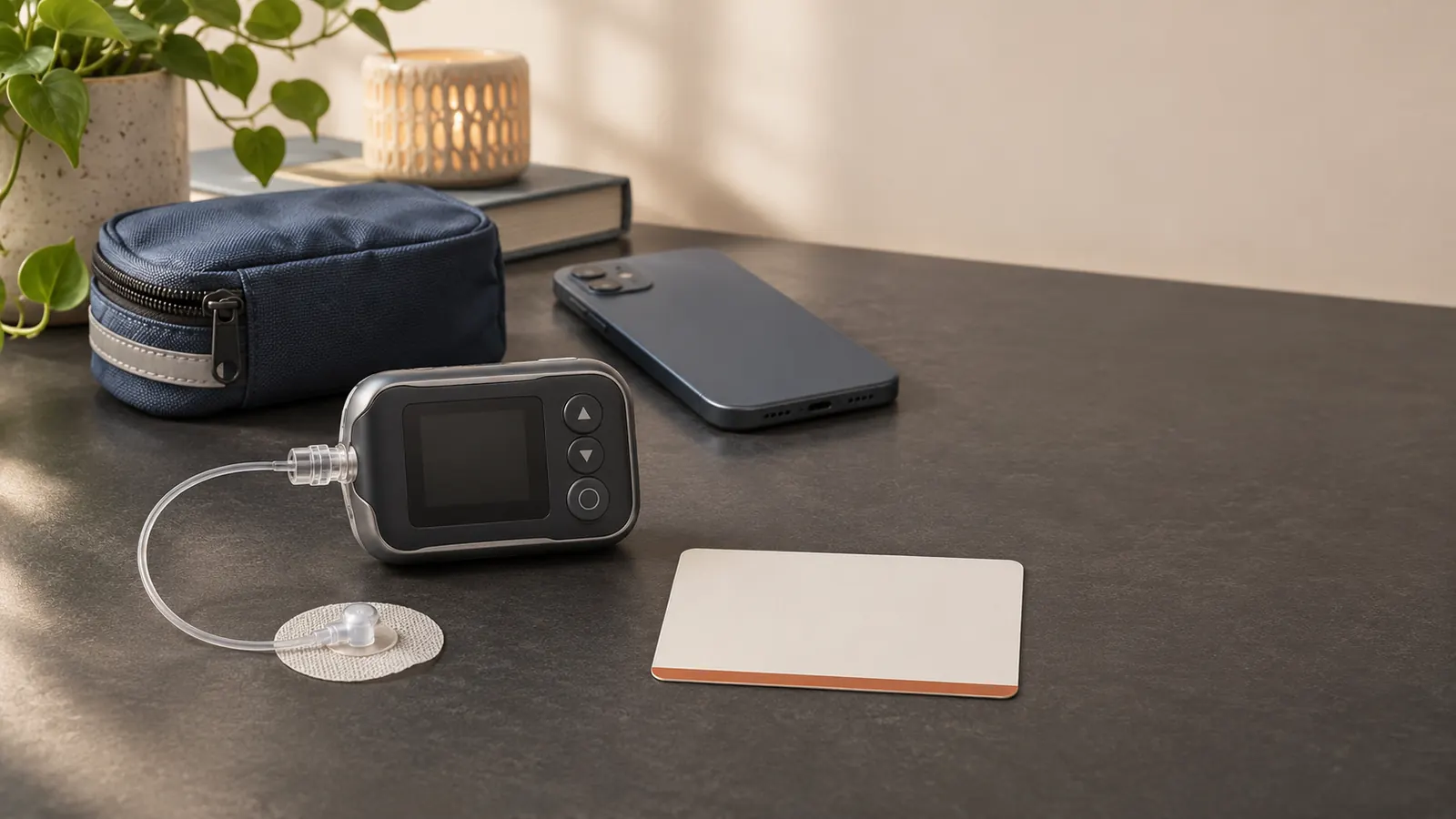
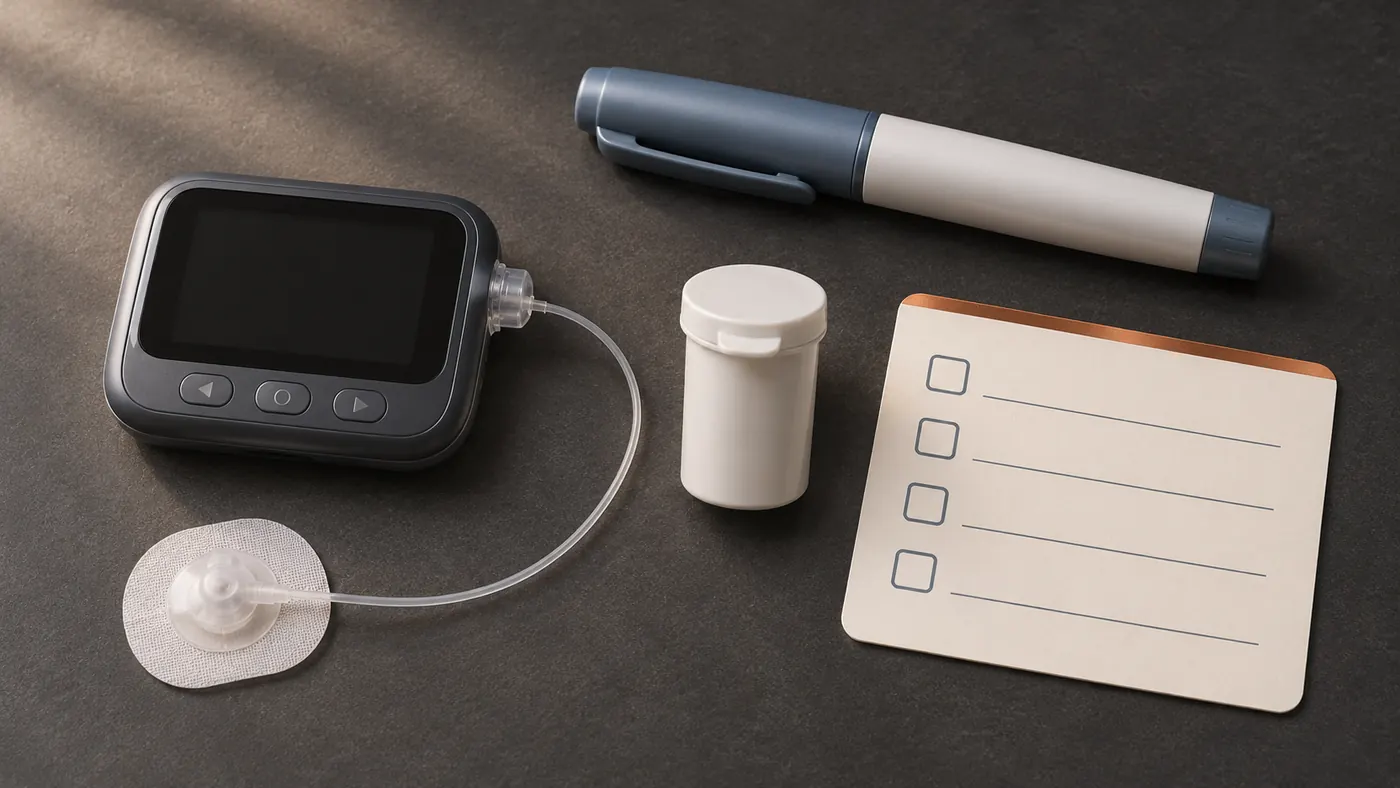
Both images are original, people-free AI editorial illustrations. They contain generic unbranded objects and are not photographs of a Tandem device, a patient, an FDA document or a real dose plan.
Source
Source: U.S. Food and Drug Administration, Tandem Diabetes Care, Centers for Disease Control and Prevention and American Diabetes Association, edited by NOCTI.
Republishing: please credit NOCTI (joinnocti.com).
Check the serial-number branch before you act
FDA’s recall page links the replacement list and gives separate instructions for listed and unlisted serial numbers. If you use a Tandem Mobi, review that official page, keep your own diabetes-care plan in charge and contact Tandem or your care team when the instructions say to.
Open the FDA recall instructions