California Youth Sports & Family Safety
California expanded its 2028 youth-sports AED law: five checks before practice
California signed AB 387 to clarify AED access at local youth-sports facilities beginning in 2028. Parents, coaches and organizers can use these five checks now without mistaking a future requirement for a current guarantee.
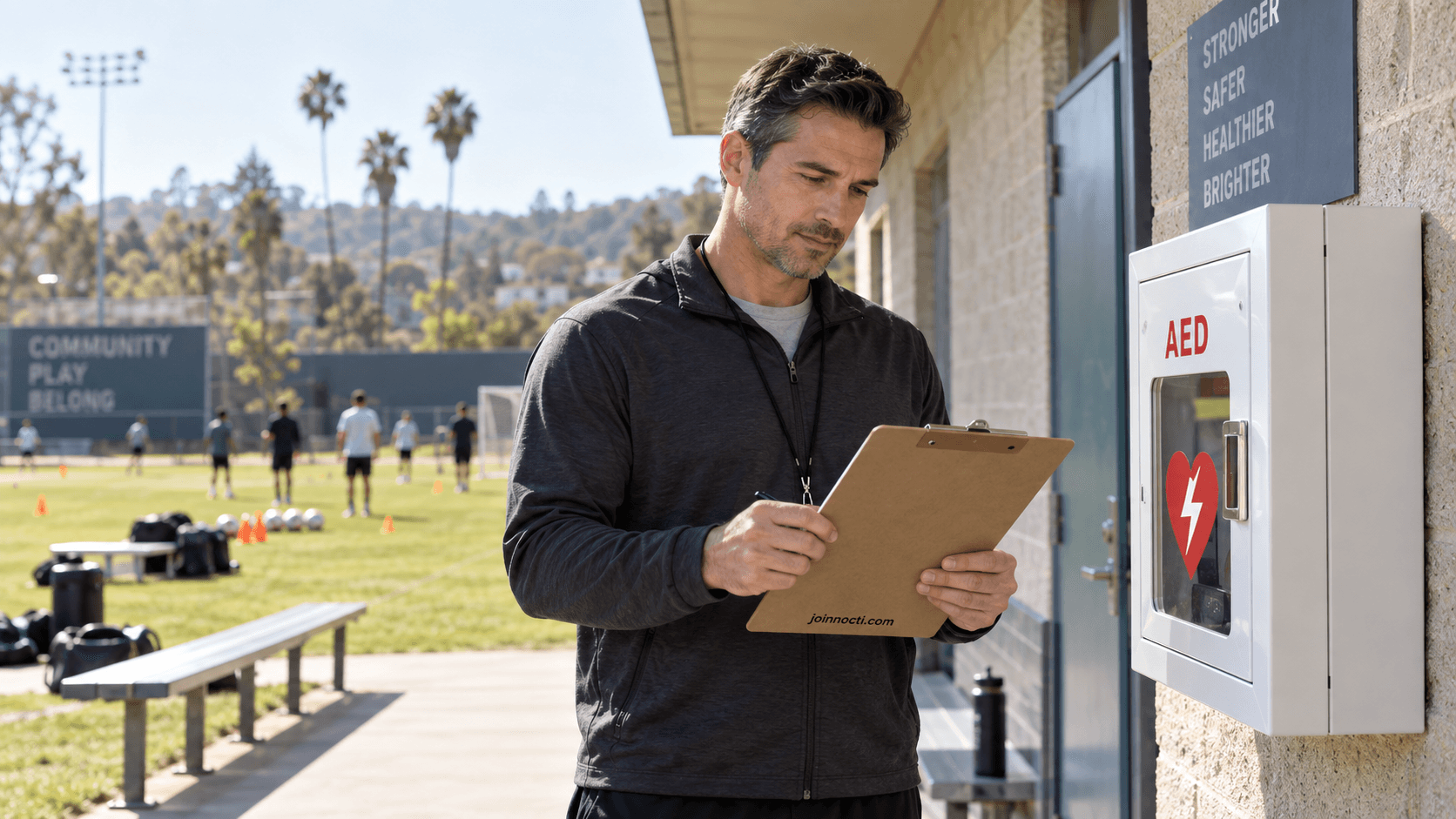
What California changed—and what it did not
Governor Gavin Newsom announced on September 27 that he signed Assembly Bill 387, which expands California’s youth-sports AED framework to address access at public and private local facilities with permanent sports infrastructure. The operative date is January 1, 2028. The new signing does not mean every field or gym has an AED today, and the bill does not require every local facility to purchase one. Under the enrolled text, when a covered facility has procured and maintains an AED, it must make the device accessible to a permitted youth sports organization during official practices and matches. If an AED is not available at the facility, the youth sports organization must ensure access to an operational device.
Who this guide is for
This is for parents and guardians, coaches, league leaders and managers of California fields, gyms and other fixed facilities used for organized youth sports. It helps with one practical decision: whether a scheduled practice or match has a clear, workable cardiac-emergency plan. It is not a medical screening tool and cannot determine whether a child is safe to play. Questions about symptoms, a personal or family heart history, fainting, chest pain or sports participation belong with an appropriate licensed clinician.
1. Confirm the date, venue and responsible organization
Start by writing down the practice or match date, the exact facility and the youth sports organization running the activity. AB 387’s facility-access provisions do not become operative until January 1, 2028, and apply to official practices or matches at a fixed, nontemporary facility designed and maintained for organized sports. The bill includes special rules for local educational agencies and says a local facility is not required to procure or install an AED. Ask the organizer which current rule or policy applies now and who is responsible for the device at that specific venue; do not treat a future statewide date as proof that an AED is already present.
2. Find the AED before play begins
Ask for the AED’s exact location and walk the route from the field, court or gym before the activity starts. Confirm that the cabinet or storage area will be accessible for the entire practice or match—not locked inside a building that closes after school—and that coaches, officials and other designated adults know the route. The bill says facilities and youth sports organizations must collaborate so an installed AED is accessible during permitted activities. An AED shown on a map is not meaningfully available if no one can reach it when the site is in use.
3. Ask who checks the device and its supplies
Identify the person or organization responsible for routine checks and ask when the AED was last inspected under the manufacturer’s instructions. AB 387 says covered facilities and youth sports organizations must ensure their AEDs are maintained and tested according to manufacturer guidance and applicable state or federal rules beginning in 2028. The FDA explains that an AED system also depends on compatible batteries and pad electrodes and publishes lists of approved devices and accessories. Parents should not open, test or alter a sealed unit themselves; ask the responsible operator to confirm the readiness indicator, pad and battery dates, accessory compatibility and process for recalls or service alerts.
4. Request the written response plan and training details
Ask the organizer for its current cardiac emergency response plan and the names or roles of people assigned to call 911, begin CPR, retrieve the AED, direct emergency responders and notify a parent or guardian. California’s framework scheduled to operate in 2028 requires coaches to be certified and recertified at least every two years in CPR and AED operation, calls for annual review of the written plan, and requires annual electronic communication to parents or guardians with the plan or a link, AED locations and designated contacts. The American Heart Association’s sports checklist also recommends posting and practicing the plan for both indoor and outdoor facilities. A certificate on file is useful; a plan that people can carry out at the actual site is the goal.
5. Know the emergency response instead of improvising
Sudden cardiac arrest usually means a person suddenly collapses, is unresponsive and is not breathing normally or is only gasping. The CDC says to call 911 immediately, begin CPR and send someone to get an AED, then continue CPR until professionals take over or the person begins breathing. Follow the AED’s spoken and visual prompts; the device analyzes the heart rhythm and delivers a shock only when appropriate. Do not delay emergency action while searching for paperwork, attempting to diagnose a heart attack or waiting for a wellness provider. Massage, stretching and recovery services do not treat cardiac arrest.
Where the most reliable check starts
Begin with the organizer and facility for the event you will actually attend, then compare their answer with the signed-bill announcement and enrolled statutory text. Ask for the current AED location, access route, responsible person and written plan in one message so the response can be saved. The next statewide milestone is January 1, 2028, but organizations do not need to wait to make locations, maintenance responsibilities and emergency roles clear. NOCTI publishes this guide as general service journalism; it is not a youth sports operator, AED inspector, emergency service or legal adviser.
Sources
- Governor of California: AB 387 included in September 27, 2026 legislative action ↗
- California Legislative Information: enrolled AB 387 text, definitions and January 1, 2028 requirements ↗
- CDC: sudden cardiac arrest signs and emergency response for children and youth ↗
- American Heart Association: Cardiac Emergency Response Plans and training resources ↗
- American Heart Association: sports-facility Cardiac Emergency Response Plan checklist ↗
- FDA: how AEDs work and how organizations can verify approved devices and accessories ↗
Start with the organizer and the facility
Ask for the current AED location, access route, responsible person and written cardiac emergency response plan for the practice or match.
Read the enrolled bill