California Consumer & Family Safety
Two California-linked toy recalls expose button batteries; check these item numbers
CPSC recalled five newly named ZMC light-up toys and Cade finger lights after finding accessible button batteries. California families can identify the items, request refunds and dispose of batteries safely.
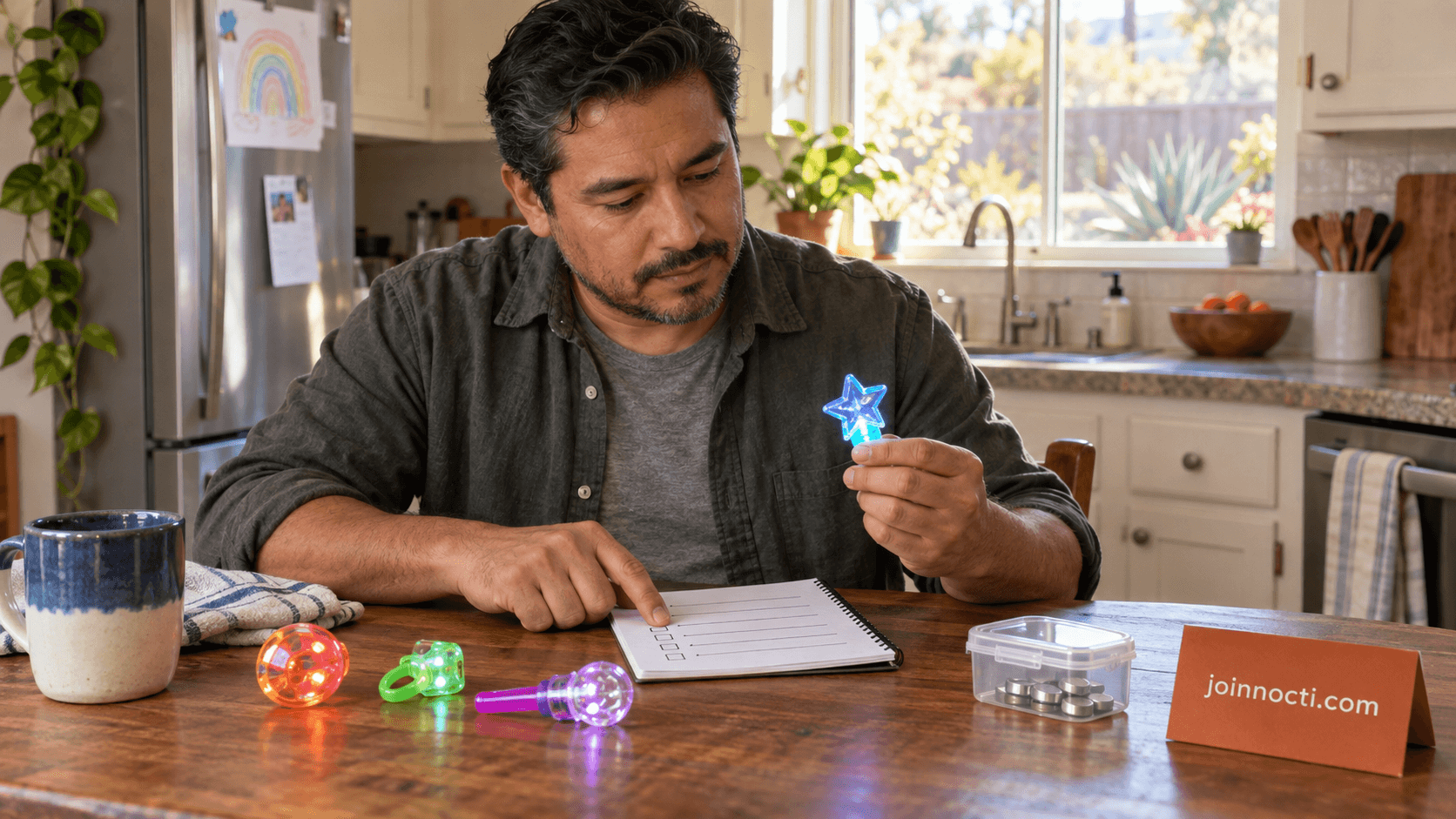
Two September 10 recalls point to the same hidden hazard
The U.S. Consumer Product Safety Commission issued two notices Thursday for inexpensive light-up toys whose button batteries can be reached by children. One expands a May recall by Los Angeles importer ZMC Group to five more product types; the other covers California Cade Electronic projecting finger lights sold on Amazon. CPSC says both sets violate the mandatory toy standard because their batteries are accessible, creating a risk of serious internal chemical burns or death if swallowed. The agency reports no incidents or injuries in either notice.
The ZMC expansion adds five item numbers
The newly named ZMC products are the 19.4-inch Mexican Flag Theme Light Up Stick, item SS041-M; Light-Up Unicorn Headband, G02-UN; Light-Up Assorted Colors Jelly Rings, PS270; Light-Up Transparent Jelly Rings, PS271; and Light-Up Heart Balloon Flower, 777-1. CPSC says the packaging carries the item number, distributor, place of manufacture, production date and batch number. The products were sold from October 2018 through July 2026 at Diva at Heart—primarily in California, Texas, Oregon, Mississippi and Arizona—through other stores and distributors, and online.
The 245,124 ZMC total includes the May recall
CPSC describes about 245,124 ZMC toys in the expanded recall, but that figure is not 245,124 newly added units. It includes the 124,560 battery-operated light-up toys recalled May 7. The earlier notice named nine different products, including light-up sticks, Halloween wands, several headbands, a flying disc, a maraca, a yo-yo and a flashing whistle necklace. Families who checked the May list should check again because Thursday's expansion adds different item numbers rather than replacing the original list.
Cade finger lights have a separate label and refund route
The Cade notice covers about 179,739 projecting finger lights sold in boxes of 50 on Amazon from March 2015 through July 2026 for $5 to $16. CPSC says the lights came in white, blue, red and green, used three button batteries each, and carried “California Cade Electronic” and “Finger Flashlights” on the package. The retailer is listed in Hacienda Heights. This is a separate recall from ZMC: compare the product name and packaging, then follow the contact instructions in the matching CPSC notice.
Stop use first; follow the recall before taking anything apart
For both recalls, CPSC tells consumers to stop using the toys immediately, take them away from children and contact the company for a refund. ZMC says it will ask consumers to remove the batteries, mark the product “RECALLED” or with a large X and submit a photo of the disposed item. Cade says consumers will be asked to dispose of the finger lights and email a photo. Read the live notice before acting, keep the product isolated from children, and do not improvise a repair or continue using an item while waiting for a response.
A suspected swallowed battery needs action before symptoms appear
A child can initially look well after swallowing a button battery. Poison Control says to call the National Battery Ingestion Hotline at 1-800-498-8666, use webPOISONCONTROL or call 1-800-222-1222 immediately; do not induce vomiting. An urgent X-ray is often needed to learn whether the battery is stuck in the esophagus, where severe damage can develop in as little as two hours. Its honey instruction applies only in narrow circumstances—when the battery was swallowed within 12 hours, the child is over 12 months old and can swallow—and it must never delay travel to the emergency department. Call 911 for trouble breathing, collapse or another life-threatening emergency.
California treats discarded button batteries as hazardous waste
CPSC says removed batteries should follow local hazardous-waste procedures. California's Department of Toxic Substances Control classifies button and coin batteries among universal-waste batteries and says discarded household batteries cannot go in the trash or ordinary curbside recycling. Orange County Waste & Recycling lists free household hazardous-waste drop-off for county residents, including a center at 6411 Oak Canyon in Irvine; its current page lists Tuesday through Saturday, 9 a.m. to 3 p.m., excluding holidays and rainy days. Verify hours before leaving, tape battery terminals with nonconductive tape for transport as the county advises, and keep batteries secured away from children.
Use the item number, preserve the notice and report problems
Take a clear photo of the product, label and item number before disposal, save the CPSC notice and keep the company's reply and refund confirmation. SaferProducts.gov accepts reports of harm or potential harm from consumer products; each CPSC recall page also provides a separate complaint form for a remedy problem or an unresponsive company. A report can be useful even when a recall notice currently lists no injuries. This article is independent consumer-safety journalism, not a product listing, legal advice or medical care. NOCTI is not affiliated with CPSC, ZMC, Cade, Amazon or any retailer, and massage or routine wellness services cannot evaluate or treat a possible battery ingestion.
Sources
- U.S. Consumer Product Safety Commission: ZMC light-up toy recall expansion (September 10, 2026) ↗
- U.S. Consumer Product Safety Commission: Cade California Electronic finger-light recall (September 10, 2026) ↗
- U.S. Consumer Product Safety Commission: original ZMC light-up toy recall (May 7, 2026) ↗
- Poison Control: button-battery ingestion hotline, X-ray and first-response guidance ↗
- American Academy of Pediatrics: button-battery injury and emergency guidance ↗
- California Department of Toxic Substances Control: household button-battery disposal rules ↗
- Orange County Waste & Recycling: battery transport and household hazardous-waste centers ↗
- CPSC SaferProducts.gov: report harm or potential harm from a consumer product ↗
Find men's massage near you
Compare local providers privately and contact the professional you choose directly.
Search NOCTI