Men’s Skin, Grooming & Lifestyle
Southern California Winter Skin: A No-Drama Guide for Dryness, Shaving and Sun
November is National Healthy Skin Month. Build a simple men’s routine for dry air, shaving irritation and year-round Southern California sun—without turning the bathroom into a laboratory.
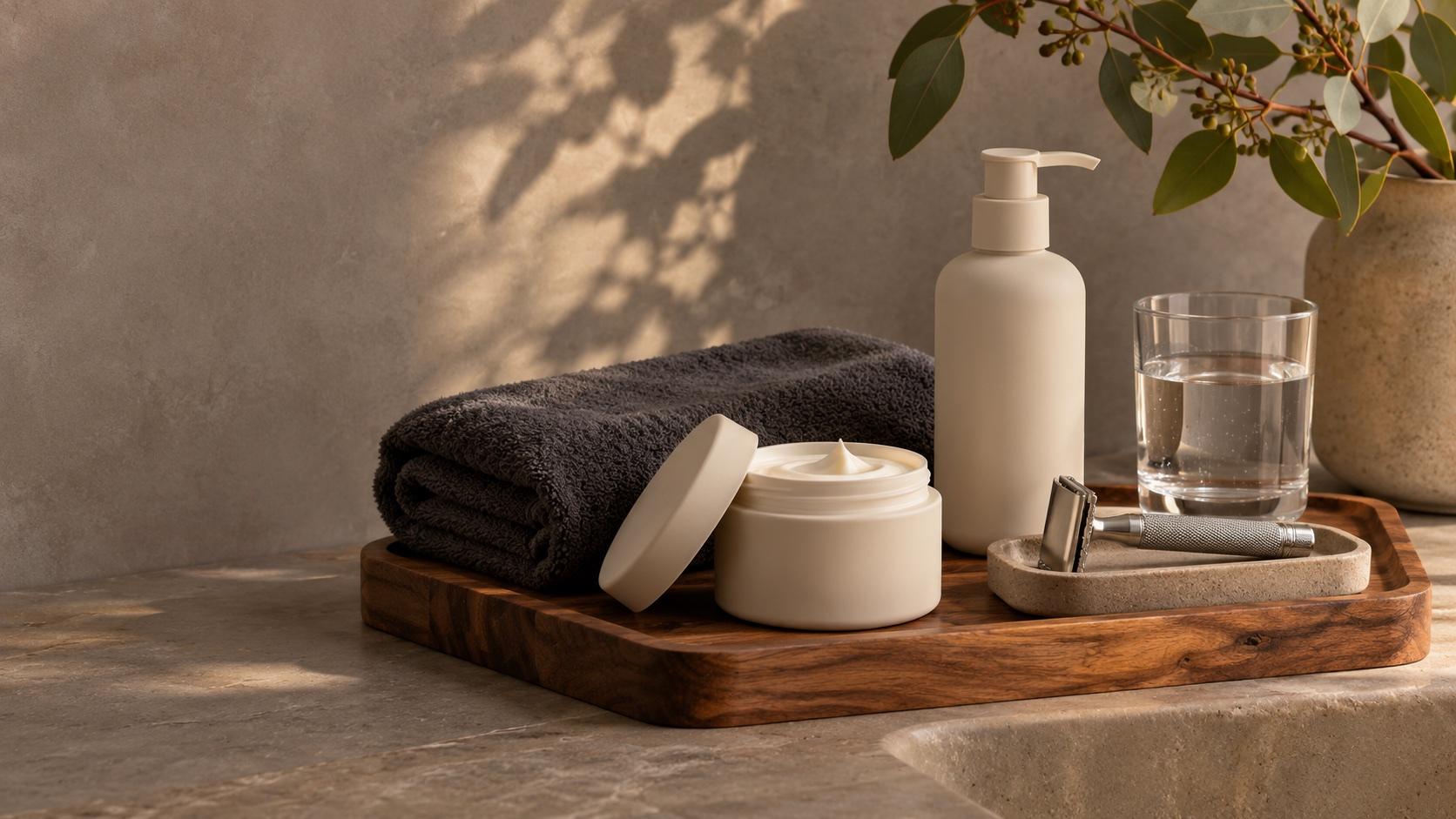
Your skin does not need a twelve-step winter personality.
Southern California winter rarely arrives wearing a snow coat. It shows up as lower humidity, dry offshore wind, indoor heat and a face that suddenly objects to the same hot shower and close shave it tolerated in July.
November is National Healthy Skin Month, an annual American Academy of Dermatology campaign. That makes this a useful moment for an edit—not a shopping spree. Start with three ordinary products: a gentle cleanser, a moisturizer suited to your skin and broad-spectrum, water-resistant SPF 30 or higher. Add one change at a time so you can tell what helps and what irritates.
The five-minute shower may do more than the expensive serum
AAD guidance for dry skin recommends limiting baths and showers to about five to ten minutes and using warm rather than hot water. Pat skin dry instead of rubbing, then apply moisturizer while skin is still damp. That timing helps trap water already in the skin.
Use cleanser where it is needed rather than chasing a mountain of lather. For skin that feels dry or sensitive, look for “fragrance-free.” “Unscented” can still mean masking fragrance is present. A cream or ointment generally holds more moisture than a thin lotion, but oily or acne-prone skin may prefer a lighter non-comedogenic product.
Shave at the end, with the grain—not against your patience
Warm water softens hair, so shave near the end of a shower. Use shaving cream or gel, move in the direction of hair growth and avoid stretching the skin taut. Rinse after each pass, use light pressure and replace a disposable blade or cartridge after roughly five to seven shaves, according to AAD guidance.
Let the razor dry somewhere other than a wet shower shelf. If close shaving repeatedly causes bumps or burning, a grooming professional can discuss technique and appearance options. Persistent, painful or inflamed bumps belong with a dermatologist; a barber or esthetic service should not diagnose or promise to cure them.
Southern California did not cancel sunscreen for November
Clouds, cooler temperatures and a good jacket do not turn off ultraviolet exposure. AAD recommends broad-spectrum, water-resistant SPF 30 or higher on exposed skin, together with shade and protective clothing. Apply it as the final skin-care step before going outside and follow the product directions for reapplication.
This is not a campaign for a “men’s” bottle with darker packaging. Choose by skin type and how the product feels in actual use. The routine you will apply consistently is more useful than the prestige formula quietly aging beside the sink.
| Moment | Useful move | Pause and reassess |
|---|---|---|
| Shower | Five to ten minutes; warm water; gentle cleanser | Very hot water, harsh scrubbing or heavy lather |
| After washing | Pat dry; apply fragrance-free moisturizer to damp skin | A product that burns, stings or worsens irritation |
| Shaving | Soften hair, use cream or gel, shave with growth, dry the razor | Repeated painful bumps, pus, swelling or persistent inflammation |
| Daytime | Broad-spectrum, water-resistant SPF 30+ plus shade and clothing | Assuming winter clouds remove UV exposure |
| Professional help | Grooming pro for cosmetic care; dermatologist for medical concerns | Anyone promising a diagnosis or cure outside their scope |
General education only. Product needs vary by skin type, health history and treatment plan.
Know what a facial can do—and what it cannot
A cosmetic facial or skin-care appointment can offer cleansing, product guidance and appearance-focused care within the provider’s training and legal scope. Before booking, ask what is included, what products will touch your skin, how the provider handles fragrance or ingredient sensitivities, whether extractions are offered and what aftercare is expected.
Do not ask an independent grooming professional to diagnose eczema, psoriasis, infection, allergy or skin cancer. NOCTI profiles help you compare published services and contact professionals directly; they do not verify a medical diagnosis or guarantee that a service is appropriate for a skin condition.
Dry is common. Cracked, bleeding or changing deserves attention.
AAD advises seeing a board-certified dermatologist when dryness continues despite basic changes or becomes painful, cracked, bleeding, intensely itchy, stinging or very irritating. A new or changing spot, a mole that itches or bleeds, signs of infection or a product reaction also deserves qualified medical attention.
Stop using a product that burns or causes a concerning reaction, and bring the ingredient list or container to the appointment. Healthy Skin Month is not about making skin flawless. It is about noticing what is ordinary, what is changing and which kind of professional belongs in the conversation.
The NOCTI edit: less shelf, more signal
For the next two weeks, shorten the hot shower, move moisturizer next to the towel, keep the razor dry and put SPF where you can see it. Introduce only one new product at a time. If you book professional grooming or skin care, ask direct questions before the appointment and keep medical concerns in the medical lane.
Good men’s care can look polished. It should also be legible: clear products, clear scope, clear boundaries and no miracle language required.
Sources (5)Read moreRead less
- American Academy of Dermatology: National Healthy Skin Month 2026
- American Academy of Dermatology: tips for relieving dry skin
- American Academy of Dermatology: skin-care tips for men
- American Academy of Dermatology: how to shave
- National Weather Service: Southern California winter humidity and Santa Ana climatology
Keep the routine simple. Make the professional choice specific.
Use NOCTI to compare independent grooming and skin-care profiles. Ask what the service includes, which products are used, how sensitivities are handled and where cosmetic care ends—then use a board-certified dermatologist for a persistent or concerning skin problem.
Explore Grooming & Skin Care