Palm Springs LGBTQ+ & Men’s Wellness Guide
Why do so many LGBTQ+ people live in Palm Springs—and what does desert living mean for men’s care?
Palm Springs did not become an LGBTQ+ destination because of one party, one neighborhood or one perfect forecast. Its appeal grew from privacy, community-building and visibility—but desert life also changes how men should think about heat, skin, recovery and care.
Quick answer: Palm Springs offered privacy first, then built visibility
Palm Springs became an LGBTQ+ hub through a combination of history, geography and community work. Its proximity to Los Angeles made the desert an escape for Hollywood figures who wanted privacy; later, LGBTQ+ residents and entrepreneurs built social networks, resorts, businesses, organizations and public traditions that made queer life increasingly visible. Warm winters and a resort rhythm helped, but weather alone does not create belonging. Palm Springs is also not one uniform “gay town,” and NOCTI found no current official percentage that can neatly define how many residents are LGBTQ+. The defensible answer is cultural: people built a place where others could more easily find community—and that infrastructure kept attracting residents and visitors.
How a Hollywood hideaway became a year-round community
Visit Palm Springs, the city’s official tourism organization, traces the story to the mid-20th century, when the area’s distance from Hollywood and culture of discretion offered breathing room to people whose private lives could threaten careers. Quiet gatherings in the 1950s and 1960s became more visible networks. By the 1980s and 1990s, gay-owned resorts, bars and other businesses had established a recognizable destination. Pride began in 1986 as a comparatively small event called Sizzle, and the first official Pride parade followed in 1992. The important shift was not simply from “hidden” to “popular.” It was from temporary privacy to durable community—businesses, friendships, advocacy, healthcare and civic participation that continued after vacation ended.
Why people stay: a community is more than nightlife
Arenas District nightlife and LGBTQ+-focused hospitality are visible parts of Palm Springs, but residents also need the ordinary things that make a city livable: neighbors, services, healthcare, cultural events and a way to be heard by local government. The City of Palm Springs maintains LGBTQ+ community and police liaisons. DAP Health, founded during the AIDS crisis, now lists primary care, HIV specialty care, PrEP and PEP access, STI services, mental-health care, substance-use support and social services among its LGBTQ+-focused offerings. Those institutions do not guarantee that every person will feel equally safe, represented or financially comfortable. They do show why Palm Springs’ appeal cannot be reduced to pools, parties or attractive men in small swimwear. The deeper draw is the possibility of living more openly while finding people and services that understand the context.
The weather is part of the fantasy—and part of the fine print
Palm Springs sells the desert beautifully: bright light, pool weather and outdoor living are real attractions, particularly during the cooler season. But “sunny” is not a complete wellness plan. In 2026, the City said its cooling centers would open when temperatures reached 100°F or higher, and it scheduled an Extreme Heat Summit focused on public health and resilience. CDC guidance says hot days can affect anyone and recommends staying cool, drinking fluids and moving outdoor activity to cooler parts of the day when possible. Dizziness, headache, weakness, nausea, unusual heavy sweating and shortness of breath can be signs that the body is overheating. Confusion, loss of consciousness or other signs of heat stroke require emergency help. A Palm Springs workout, hike or pool day should begin with the forecast—not the outfit.
What desert living can do to a men’s-care routine
Dry air, strong sun, sweat, air conditioning and frequent pool time can pull a routine in opposite directions: skin may feel dry or irritated while sweat and heavier products can still contribute to clogged pores. The American Academy of Dermatology recommends choosing moisturizer for the person’s skin type, applying it to damp skin and using broad-spectrum, water-resistant sunscreen with SPF 30 or higher. Shade, protective clothing, a wide-brimmed hat and UV-protective sunglasses still matter because sunscreen is not a force field. Men with facial hair, a shaved scalp or a hairy chest may need different product textures for even coverage. Painful cracking, bleeding, a persistent rash or a changing skin spot deserves a qualified medical evaluation, not another aggressive scrub or a provider working outside scope.
| Palm Springs factor | What it may change | Practical next step |
|---|---|---|
| Strong sun and high UV exposure | Sunburn, photoaging and eye exposure remain possible across skin tones | Use broad-spectrum, water-resistant SPF 30+, seek shade and add protective clothing and sunglasses. |
| Extreme heat | Outdoor exercise, walking and travel can become unsafe faster than expected | Check current HeatRisk, move activity to cooler hours, carry water and know heat-illness warning signs. |
| Dry air and air conditioning | Skin may feel tight, flaky, itchy or irritated | Use a gentle cleanser and a moisturizer suited to your skin; seek medical care for painful cracking, bleeding or a persistent rash. |
| Pool, grooming and bodywork culture | Appearance and recovery services may overlap, but provider scopes do not | Ask what is included, verify the credential claimed and keep diagnosis or treatment questions with a licensed clinician. |
| Large, visible LGBTQ+ community | Some clients may expect affirming care and privacy without having to explain themselves | Ask a direct comfort question and use clinics or providers that clearly describe their services, boundaries and confidentiality practices. |
This table is a planning guide, not a diagnosis or a claim that every Palm Springs resident has the same needs.
The tanning-bed twist: a glow is not proof of healthier skin
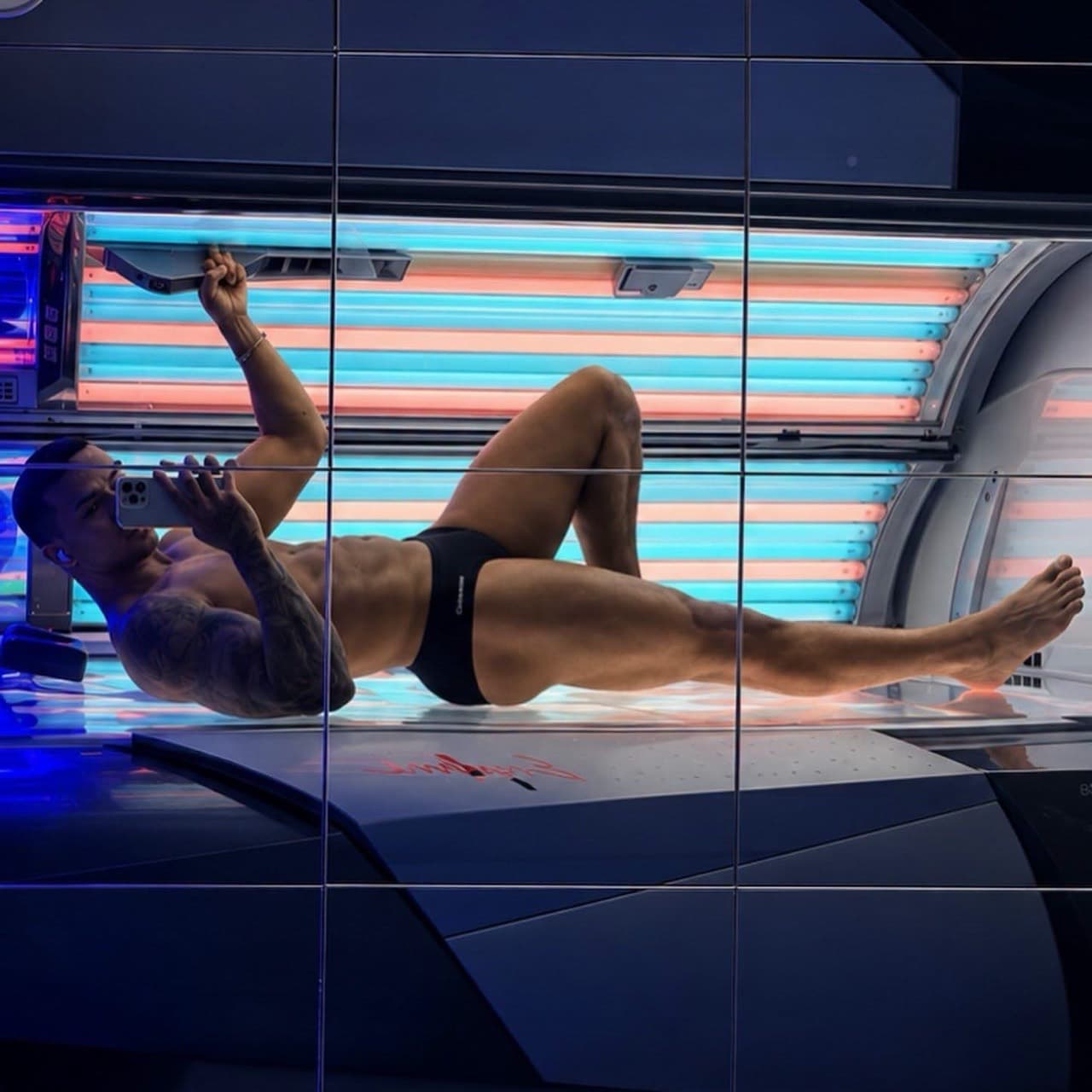
The hero image is deliberately a little sassy: Palm Springs already brings plenty of ultraviolet exposure, so adding a tanning bed is not “desert wellness.” The FDA says there is no such thing as a safe tan; the color change is a sign of UV injury, and tanning does not provide meaningful protection from later sunburn or skin damage. UV exposure can contribute to premature aging, eye injury and skin cancer. That does not mean shaming someone who likes a bronzed look. It means separating an appearance goal from a health claim. If a spot changes in size or color, bleeds, oozes, becomes scaly or suddenly feels tender or itchy, ask a clinician or dermatologist to evaluate it. Do not ask a massage, grooming or fitness provider to diagnose a lesion.
Five ways to find the men’s care you actually need in Palm Springs
1. Name the real goal. “Wellness” is too broad; decide whether you need a massage, barber, skin service, trainer, STI test, primary-care appointment or mental-health support. 2. Check the environment before the appointment. Review the day’s HeatRisk, travel time, parking and whether an outdoor workout or long walk should move to a cooler hour. 3. Match the provider to the scope. Read the service description, credential claim, location, privacy policy, price and cancellation terms. A welcoming vibe does not replace professional boundaries. 4. Ask one direct comfort question. Examples: “Is this service men-focused or LGBTQ+-welcoming?”, “What areas are included?”, “How is draping handled?” or “Can you accommodate sensitive skin?” A professional should answer without pressure or embarrassment. 5. Use the right starting point. NOCTI can help compare published independent provider information. For primary, sexual or mental healthcare, use a qualified clinic such as DAP Health or another licensed healthcare source. For a medical emergency—including suspected heat stroke—call 911.
So, does Palm Springs need more men’s care?
The useful answer is not a made-up market statistic. A visible LGBTQ+ population, year-round residents, seasonal visitors, older adults, hospitality workers and an active fitness-and-resort culture create many different care needs—but demand must be demonstrated through real searches, provider availability and community data. NOCTI’s role is to make existing options easier to understand: what a provider offers, where the service happens, what it costs, which credential is actually claimed and how to contact the provider directly. Palm Springs does not need another vague promise to “live your best life.” It needs clearer paths between a real need and a qualified, respectful next step.
Sources
- Visit Palm Springs: LGBTQ+ history from Hollywood privacy to visible community (August 23, 2026) ↗
- Visit Palm Springs: LGBTQ+ travel, culture, businesses and community ↗
- City of Palm Springs: LGBTQ+ city, police and community resources ↗
- City of Palm Springs: 2026 cooling centers and 100°F activation threshold ↗
- City of Palm Springs: announced September 18, 2026 Extreme Heat Summit ↗
- CDC: current extreme-heat health guidance and warning signs (reviewed July 20, 2026) ↗
- American Academy of Dermatology: choosing moisturizer and daily sun protection ↗
- American Academy of Dermatology: broad-spectrum, water-resistant SPF 30+ sunscreen guidance ↗
- FDA: tanning, UV damage, premature aging, eye injury and skin-cancer risk ↗
- DAP Health: LGBTQ+ primary, sexual, mental and social-support services in Palm Springs ↗
Find men’s massage near you
Compare local providers privately and contact the professional you choose directly.
Search NOCTI