HEALTH / Rare Disease & Neuromuscular Care
Welgemda Is the First LGMD Treatment. Who Qualifies Now?
FDA approved Welgemda (ribitol) for adults and children with LGMD2I/R9 who weigh at least 30 kilograms. Here is what the 12-month FORTIFY results showed, why genetic subtype matters and what patients still need to ask about access, safety and longer-term evidence.

The short answer
FDA approved Welgemda (ribitol) on November 23 for adults and children with LGMD2I/R9 who weigh at least 30 kilograms. It is an oral solution taken twice daily. Approval rested on 12-month FORTIFY results in 112 genetically confirmed participants; it does not cover other LGMD subtypes or settle long-term durability.
What did FDA approve?
The U.S. Food and Drug Administration granted traditional approval to Welgemda for limb-girdle muscular dystrophy type 2I/R9, also called FKRP-related LGMD. FDA describes it as the first approved treatment for this subtype and the first approved therapy for any form of limb-girdle muscular dystrophy.
The medicine is an oral solution mixed with water and taken twice daily. The indication covers adults and pediatric patients who weigh at least 30 kilograms—about 66 pounds. That exact boundary matters. “First for LGMD” is a historic headline; it is not a universal backstage pass for every LGMD subtype.
Why does the FKRP subtype matter?
LGMD is a family of inherited muscle diseases, not one diagnosis with one mechanism. In LGMD2I/R9, variants in the FKRP gene disrupt the process that adds sugar structures to alpha-dystroglycan. FDA explains that alpha-dystroglycan helps anchor muscle cells to surrounding tissue. When the anchoring system is impaired, muscle cells become more fragile over time.
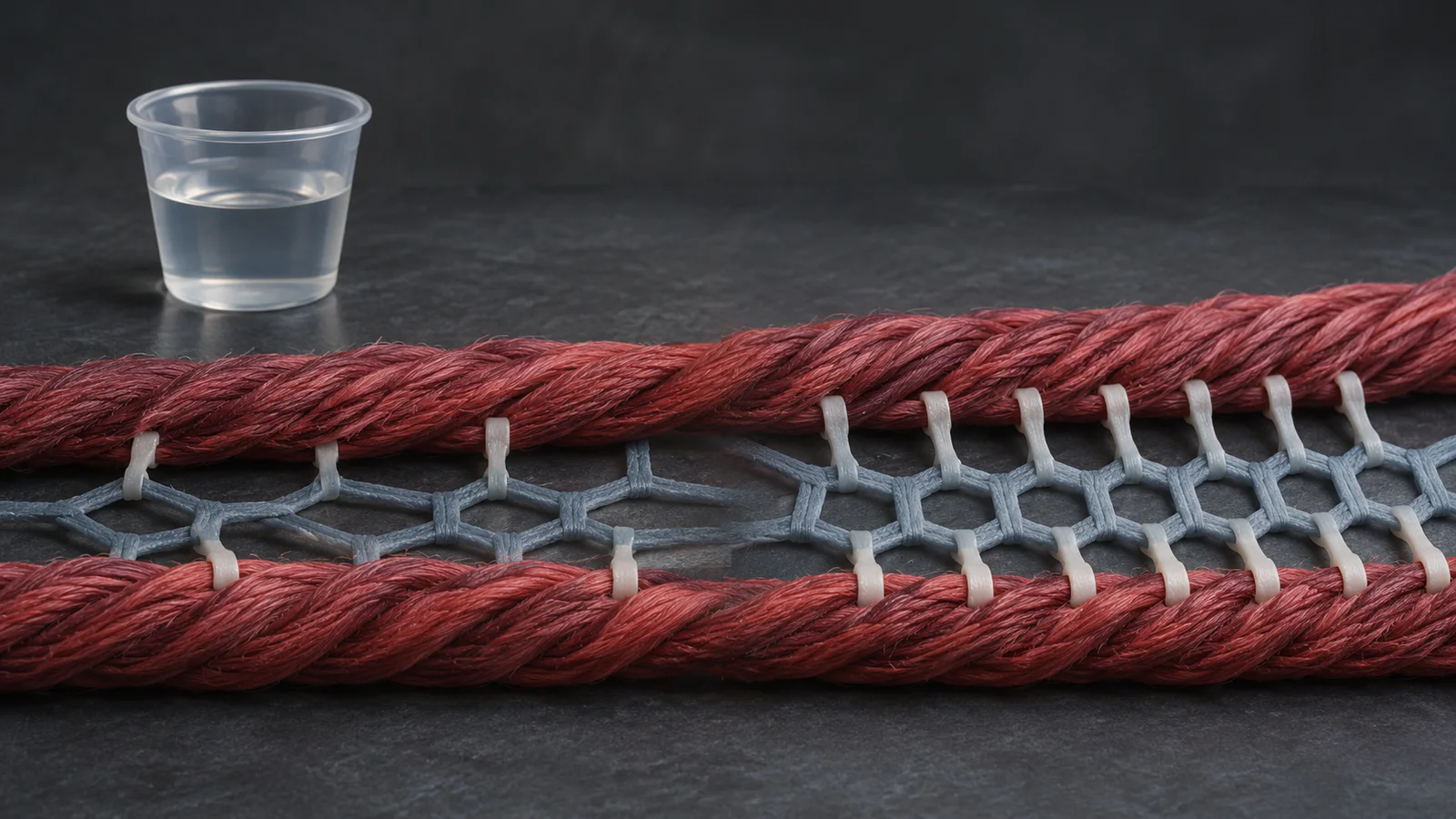
FDA says Welgemda’s precise treatment mechanism is not fully known. The working explanation is that it may increase matriglycan, a natural sugar structure involved in that anchoring process. The careful word is “may.” A plausible mechanism supports the decision; it does not turn a conceptual diagram into proof of what happens in every person.
What did the FORTIFY trial show at 12 months?
FORTIFY is a randomized, double-blind, placebo-controlled Phase 3 study involving 112 people with genetically confirmed LGMD2I/R9. At a planned 12-month interim analysis, FDA reported significant improvements with Welgemda versus placebo in 100-meter timed-walk velocity and forced vital capacity, a measure related to respiratory muscle function.
The sponsor’s SEC-filed announcement gives the numerical differences: a 0.27-meter-per-second advantage in 100-meter timed-test velocity and a 4.89-percentage-point advantage in forced vital capacity percent predicted. Those are sponsor-reported trial results, not guarantees for an individual. FDA also reported increased glycosylated alpha-dystroglycan, supporting that the drug reached its intended biological target.
Why is a 12-month result enough for full approval—but not the end of the story?
FDA granted traditional approval, not an accelerated approval conditioned on a surrogate endpoint. The agency relied on randomized clinical outcomes in walking speed and lung function plus the biological measure.
The trial is still designed to run for up to 36 months. ClinicalTrials.gov lists it as active and no longer recruiting, with the longer follow-up continuing. That creates the central limitation: the first year answered enough for approval, while the final study is still needed to show how the differences hold up over time. Milestone and unfinished evidence can occupy the same sentence without starting a fight.
| Question | Established now | Still limited or unknown |
|---|---|---|
| Who is covered? | Adults and pediatric patients with LGMD2I/R9 weighing at least 30 kg | People under 30 kg and people with a different LGMD subtype are not covered by this indication |
| What evidence supported approval? | A randomized, double-blind, placebo-controlled 112-person FORTIFY trial with a planned 12-month interim analysis | The study continues to 36 months, so durability and the final longer-term picture remain unfinished |
| What improved at 12 months? | FDA reported significant gains in 100-meter walking speed and forced vital capacity versus placebo | Those group averages do not predict one person’s response or replace an individual baseline |
| Where is it approved? | United States | The sponsor says it is not approved or available outside the U.S. |
| What about price and coverage? | The sponsor announced an immediate U.S. launch and a support program | The reviewed primary sources do not publish one price, coverage decision or pharmacy date for every patient |
Approval is a regulatory decision for a specific disease subtype and weight threshold—not a blanket approval for every form of limb-girdle muscular dystrophy.
Who should ask about Welgemda now?
The approval applies to a specific combination: LGMD2I/R9, adult or pediatric status, and body weight of at least 30 kilograms. The pivotal trial required genetic confirmation. The Muscular Dystrophy Association says genetic testing is increasingly important for an accurate diagnosis and for deciding whether a treatment fits a specific genetic subtype.
That does not mean a search result can diagnose FKRP-related LGMD, or that a consumer test alone establishes treatment eligibility. A neuromuscular specialist can interpret the clinical history, genetic result, current mobility, respiratory function, heart involvement, other medicines and the approved labeling together.
What are the common side effects?
FDA lists gastrointestinal effects, including diarrhea and stomach pain, plus joint pain among the most common adverse reactions. The sponsor’s filed safety summary also lists nausea, indigestion or heartburn, flu and gas. It says there were no severe or serious diarrhea cases and no treatment discontinuations due to adverse reactions in the clinical study.
Those details come from a 112-person trial. “Generally well tolerated” describes a group result; it is not a personal prediction. Ask the prescribing team which symptoms deserve a call, how other conditions and medicines affect the plan, and which current label instructions apply.
Does “immediate U.S. launch” mean everyone can get it today?
No. BridgeBio said it anticipates an immediate U.S. launch and offers an access-support program for prescribed patients. That is a company statement about launch operations, not proof that every insurer, specialty pharmacy or clinic can complete the process immediately.
The reviewed primary sources do not provide one public list price, one universal coverage rule or one patient-level delivery date. They also say Welgemda is not approved or available outside the United States. Ask the clinic to verify the prescription pathway, prior authorization, pharmacy, out-of-pocket estimate and support-program terms before treating “launched” as “in hand.”
The strongest counterargument: one subtype is not the whole LGMD community
For people with LGMD2I/R9, the first disease-specific treatment is a genuine historical break from supportive care alone. For people with another LGMD subtype, under the 30-kilogram threshold or outside the U.S., the approval may feel both hopeful and maddeningly narrow.
That tension is not a reason to flatten the news. It is a reason to name the boundary. Supportive neuromuscular care—mobility, respiratory, cardiac, rehabilitation and other individualized management—does not evaporate because one drug arrived. The approval also creates a precedent and a research signal, not an automatic extension to genetically different diseases.
What is known, inferred and still unknown?
Known: FDA approved Welgemda for adult and pediatric patients with LGMD2I/R9 weighing at least 30 kilograms. The 112-person randomized trial showed significant 12-month group differences in walking speed and forced vital capacity. Common adverse reactions included gastrointestinal effects and joint pain.
Inferred: the approval makes accurate subtype identification and specialist access more consequential, because an actionable diagnosis now exists for some people. It does not follow that everyone with weakness, every FKRP variant or every LGMD subtype qualifies.
Unknown from the reviewed primary sources: one universal price, one insurance outcome, individual availability dates, effects below 30 kilograms, efficacy in other LGMD subtypes and the final 36-month durability picture.
Eight questions to take to a neuromuscular appointment
1. Is my diagnosis specifically LGMD2I/R9, and what evidence confirms the FKRP-related subtype?
2. Does the approved 30-kilogram threshold apply to me or my child now?
3. How do my current 100-meter walking and lung-function measures compare with the trial population?
4. What can the 12-month group results reasonably predict—and not predict—for me?
5. Which side effects, other medicines and health conditions matter before treatment?
6. How will mobility, breathing, heart and rehabilitation care continue alongside a prescription?
7. Which insurer, specialty pharmacy and support-program steps are required, and what costs are still unknown?
8. What longer-term FORTIFY data should we watch as the 36-month study continues?
Frequently asked questions
What is Welgemda approved to treat? LGMD2I/R9, also called FKRP-related limb-girdle muscular dystrophy, in adults and pediatric patients weighing at least 30 kilograms.
Does Welgemda treat every type of limb-girdle muscular dystrophy? No. It is the first treatment approved within the broader LGMD family, but the indication is limited to LGMD2I/R9.
Is Welgemda a pill? FDA describes it as an oral solution mixed with water and taken twice daily.
Was the approval based only on a laboratory marker? No. FDA reported 12-month improvements versus placebo in timed walking speed and forced vital capacity, plus an increase in glycosylated alpha-dystroglycan.
Is the final long-term evidence complete? No. The 12-month interim analysis supported approval, while FORTIFY continues toward its planned 36-month analysis.
Is it available outside the United States? The sponsor says it is not currently approved or available outside the U.S.
Editorial and image note
This article was checked against FDA’s November 23 approval announcement, the current FORTIFY ClinicalTrials.gov record, BridgeBio’s SEC-filed announcement and the Muscular Dystrophy Association’s response. FDA supports the indication and high-level findings; sponsor-specific numbers, launch statements and support-program details are identified as company claims.
Public search and forum discussions informed recurring questions about genetic confirmation, the 30-kilogram threshold, other LGMD subtypes, side effects, price, insurance, U.S. availability and the unfinished 36-month study. Reddit surfaced only limited older discussion, and X did not return a reliable current discussion set. No representative-opinion, search-volume or trending claim is made.
Both original AI-generated NOCTI images are people-free conceptual illustrations. They show generic teaching objects, an unbranded bottle, dosing cup and fiber models—not Welgemda packaging, a real cell, a patient, an individual response or proof of efficacy.
Source
Source: U.S. Food and Drug Administration, ClinicalTrials.gov, U.S. Securities and Exchange Commission and Muscular Dystrophy Association, edited by NOCTI.
Republishing: please credit NOCTI (joinnocti.com).
Take the subtype to a neuromuscular team.
Ask whether the diagnosis is specifically FKRP-related LGMD2I/R9, how the 30-kilogram threshold applies, what the 12-month evidence means for your current mobility and breathing, and how access, monitoring and supportive care fit together. Do not start, stop or substitute treatment from a headline.
Find an MDA Care Center