Consumer Safety & Financial Wellness
FTC warns scammers are cloning car-dealer websites: checks to make before you pay
A new FTC alert says scammers are copying real dealerships online to collect upfront payments for cars they do not have. California buyers have several ways to verify the seller and vehicle first.
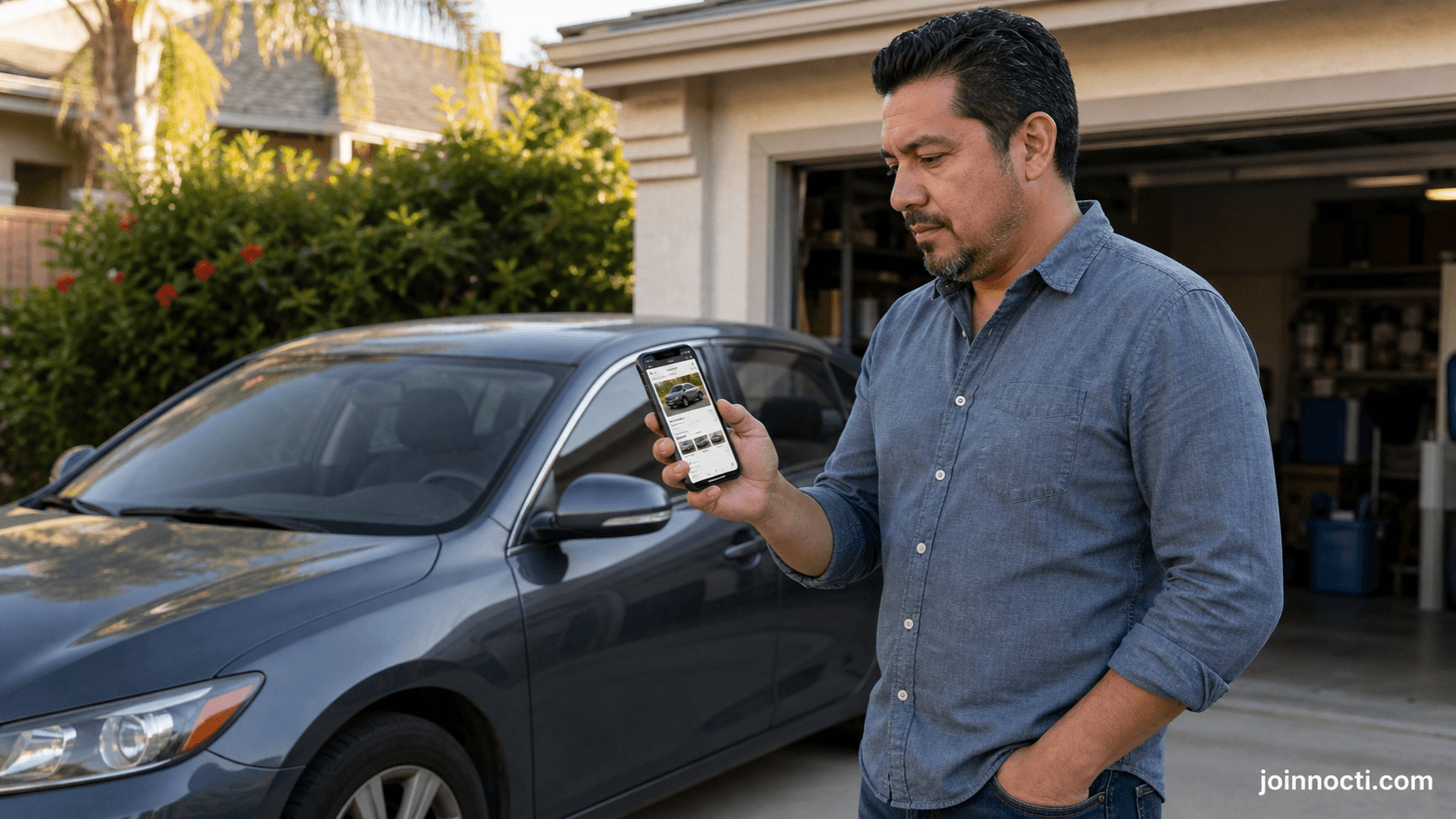
A cloned dealership can look like the real business
Scammers are copying real auto-dealer websites—including logos, vehicle photos, listings and customer testimonials—to collect upfront payments for cars they do not possess, the Federal Trade Commission warned September 1. The agency says some of the fake sites promote rare muscle cars or hard-to-find classics and describe polished return policies to make the transaction feel routine. A professional design, familiar dealership name or detailed inventory page is therefore not proof that the person taking payment controls the business or the vehicle.
The FTC alert describes the method, not its scale
The new consumer alert does not identify specific dealerships, websites, victim counts or losses, and it does not say that every online auto listing is suspicious. Its actionable point is narrower: a criminal can impersonate a legitimate dealer closely enough that reviews and branding alone may point back to the real company while the buyer is communicating with the impostor. Treat the dealer, the vehicle and the payment instructions as three separate facts to verify before money or identity documents change hands.
Verify the dealer outside the listing that brought you there
Search the dealer name with terms such as “scam,” “review” and “complaint,” as the FTC recommends, but do not stop at search results. For a business claiming to be a California dealer, use the California DMV’s Occupational Licensing Status system from the DMV website. Compare the licensed name, address and phone number with information you reach independently—not through a link, ad, text or email supplied by the seller. Then call the independently verified number and ask the dealership to confirm the salesperson, vehicle and payment instructions. A valid dealer license does not by itself prove that a look-alike web address belongs to that dealer.
Verify that the vehicle exists and can be inspected
Ask for the vehicle identification number, current location and an appointment to see the car. If distance makes an in-person visit impractical, the FTC says to request a mobile inspection service; refusal is a reason to walk away. The FBI’s Internet Crime Complaint Center also advises buyers to confirm that the seller actually possesses the vehicle, research the contact details and ask for the VIN and, when possible, the license plate and registered owner’s name. Use the federal National Motor Vehicle Title Information System at VehicleHistory.gov and arrange an independent mechanical inspection. A history report and an inspection answer different questions, so one should not be treated as a substitute for the other.
A wire-only demand is a stop sign
The September 1 alert tells buyers to leave when a supposed dealer insists on upfront payment by wire transfer only. FTC guidance explains why: a wire transfer can be collected quickly, is difficult to trace and usually does not offer the protections associated with a credit-card transaction. Do not let a scarce model, shipping deadline or promised discount compress the verification process. Before any payment, obtain the complete price and terms in writing, confirm the recipient’s legal business name through the dealer’s independently verified contact channel and ask your bank or card issuer what protections apply to the proposed method.
California protections do not turn every online offer into a safe deal
The California DMV says the state’s Car Buyer’s Bill of Rights applies to retail vehicle sales by California-licensed dealers, not private-party transactions. Among other provisions, buyers of used cars priced below $40,000 must be offered a two-day contract-cancellation option agreement; that is not an automatic cooling-off period, and listed exceptions apply. Those rights matter after the seller and transaction are real. They should not be used as evidence that an unverified website is legitimate. This article is general consumer education, not legal advice; consult the DMV’s current guidance or a qualified professional about a specific dispute.
If you sent money, move quickly and preserve the trail
Contact the bank, card issuer or wire-transfer company immediately, report the transaction as fraudulent and ask whether it can be stopped or reversed. Save the web address, screenshots, listing, emails, texts, phone numbers, payment instructions, receipts and account details. Report the fraud to the FTC at ReportFraud.ftc.gov and to the FBI at IC3.gov; the FBI asks complainants to include the websites, communication methods, payment accounts, dates and other identifying details. If you shared a Social Security number or other identity information, use IdentityTheft.gov to build a recovery plan. Call 911 if there is an immediate threat to personal safety.
The local relevance is a verification tool—not a claimed local outbreak
The FTC alert is national and does not publish California, Orange County, Irvine or Los Angeles case totals. NOCTI found no official basis to claim a local surge. California is relevant here because its DMV provides a state licensing lookup and current buyer-rights guidance that residents can use during verification. The financial-health lesson is simple: pause before a high-value transfer, confirm the business through a channel the seller did not provide, and bring in a trusted person if urgency or excitement is narrowing the decision. NOCTI publishes educational community-safety information and does not sell vehicles, certify dealers or provide legal or financial advice.
Sources
- FTC: Scammers are spoofing car dealership websites (September 1, 2026) ↗
- FBI Internet Crime Complaint Center: Fraudulent online vehicle sales ↗
- California DMV: Car Buyer’s Bill of Rights and dealer-license verification ↗
- FTC: What to know when buying a used car online ↗
- FTC: What to know before you wire money ↗
- National Motor Vehicle Title Information System: VehicleHistory.gov ↗
- FTC: IdentityTheft.gov recovery planning ↗
Find men's massage near you
Compare local providers privately and contact the professional you choose directly.
Search NOCTI