HEALTH / HIV Prevention
PrEP Is Not “Just a Gay Men’s Thing.” New CDC Data Make That Awkwardly Clear.
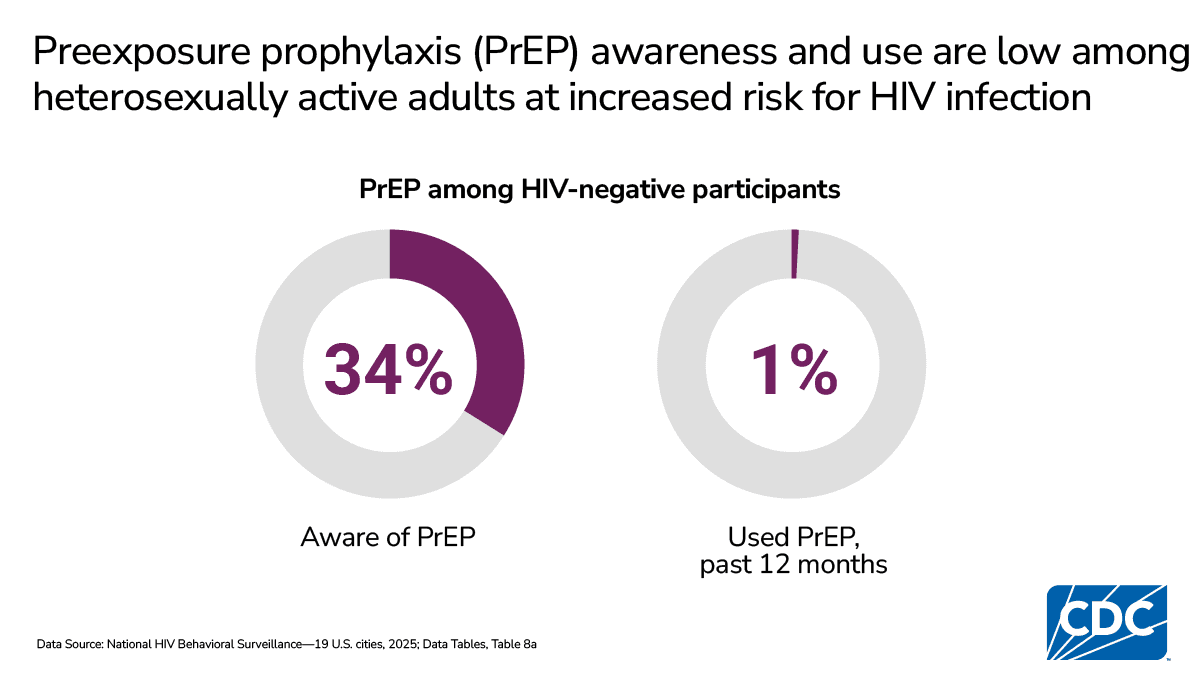
In a CDC sample of 6,591 heterosexually active adults at increased risk for HIV across 19 U.S. cities, 34% knew about PrEP and 1% reported using it. The numbers are not national estimates—but the awareness gap deserves attention.
The short answer
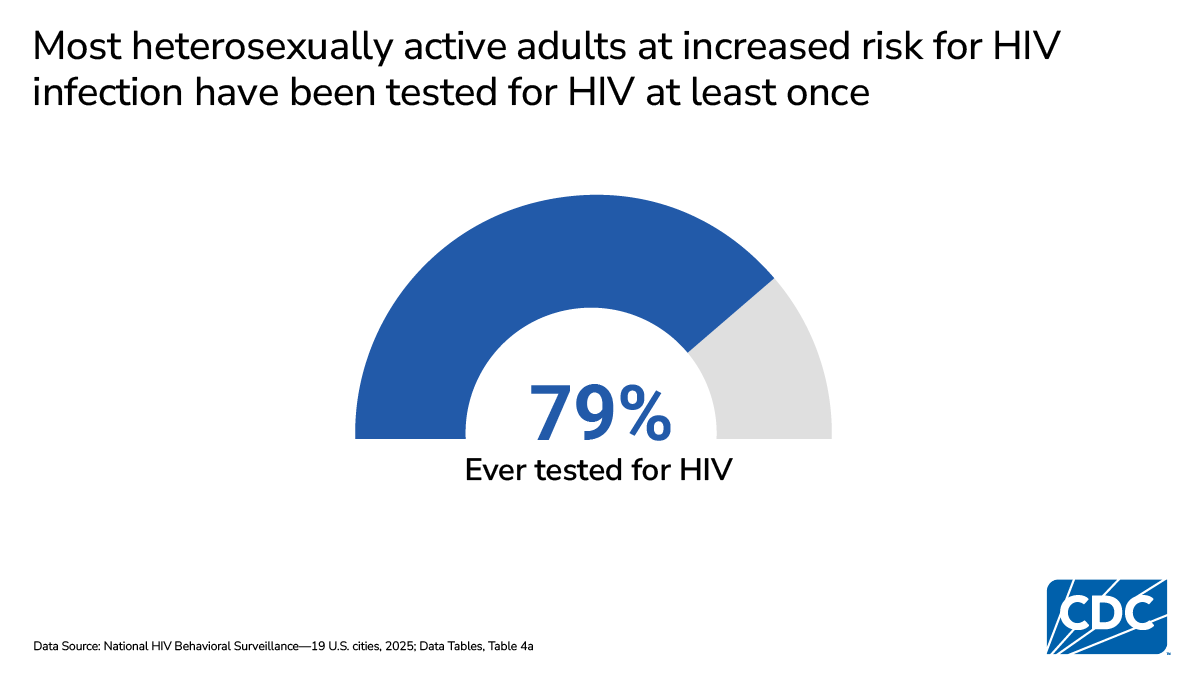
CDC's newly published 2025 surveillance data describe 6,591 heterosexually active adults at increased risk for HIV in 19 U.S. metropolitan areas. Among sampled participants without HIV, 34% knew about PrEP and 1% reported using it. Across the broader sample, 79% had ever received an HIV test. These are descriptive, unweighted findings from a selected population—not national estimates.
The stereotype is doing public health no favors
HIV prevention is often marketed as if heterosexual men can leave the room. The virus did not sign that branding agreement.
CDC recommends informing all sexually active adults about PrEP. That does not mean everyone needs it. It means adults deserve enough information to discuss their actual partners, practices and exposure pattern with a clinician instead of deciding that PrEP belongs to somebody else's identity.
What the study actually measured
The National HIV Behavioral Surveillance release focused on heterosexually active adults at increased risk for HIV. The sample came from 19 metropolitan areas with high HIV prevalence and used specific eligibility rules, including socioeconomic criteria. Men with any history of sex with men and people with a history of injection drug use were excluded from this analysis.
The results are unweighted and descriptive. They should not be used to estimate PrEP awareness, testing or HIV prevalence among every heterosexual adult in the United States. They also cannot tell us that low awareness caused low use. Cost, access, perceived risk, medical eligibility, stigma and provider behavior may all matter; this release does not assign each factor a percentage.
The prevention gap in three numbers
Among HIV-negative sampled participants, 34% were aware of PrEP and 1% reported using it during the past 12 months. CDC reports that awareness ranged from 5% to 58% across participating cities, while reported use ranged from 0% to 3%.
Across the overall sample, 79% had ever received an HIV test. “Ever” matters. It does not tell us whether the test was recent enough for a person's current situation or whether testing was repeated after later exposures.
| Finding | What it supports | What it does not prove |
|---|---|---|
| 34% knew about PrEP | Awareness was limited in this selected sample. | That 34% of all heterosexual U.S. adults know about PrEP. |
| 1% reported PrEP use | Reported use was uncommon among HIV-negative sampled participants. | Why any individual did or did not use PrEP. |
| 79% had ever tested for HIV | Most sampled participants reported at least one lifetime test. | That testing was recent or repeated when needed. |
| 19 metropolitan areas | The release offers city-based surveillance from high-prevalence areas. | A national prevalence estimate or causal study. |
Testing is not a personality test
An HIV test is information. It is not a confession, a label or a review of someone's character.
Testing frequency depends on exposure, partners, prevention methods and clinical guidance. A clinician may also recommend testing for other sexually transmitted infections based on the body sites involved. Urine testing alone does not answer every question when throat or rectal exposure occurred.
If a possible HIV exposure happened within the last 72 hours, ask for PEP immediately. Do not wait for symptoms. PEP is time-sensitive, and earlier evaluation is better.
PrEP deserves a conversation based on behavior—not identity
PrEP is medication used by people without HIV to reduce the chance of acquiring HIV. Available options, monitoring and suitability depend on medical history, kidney and hepatitis B considerations, current HIV testing and the specific product.
The useful question is not “Am I the type of person who takes PrEP?” It is “Would PrEP fit my actual risk and routine?” A qualified clinician can help answer that. Your dating profile cannot.
What 79% tested really leaves unanswered
A high lifetime-testing percentage can sound reassuring. But a test taken years ago does not cover later exposures, and someone may not know which test was used or whether the timing captured a recent infection.
The CDC chart is worth reading as a prompt, not a victory banner. Men need routine, stigma-free opportunities to discuss HIV alongside blood pressure, vaccines, sleep and sexual health. Prevention works better when nobody has to first prove that he belongs in the conversation.
What NOCTI readers can do now
1. If you have never tested, use the HIV.gov locator to find an option near you.
2. If a possible exposure was within 72 hours, seek PEP evaluation now.
3. Ask a clinician whether PrEP fits your partners, practices and health history.
4. If you are living with HIV, treatment can protect your health. People who take treatment as prescribed and maintain an undetectable viral load do not sexually transmit HIV—U=U.
5. Do not diagnose a partner by appearance, identity or confidence. None of those is a laboratory result.
Editorial note
This article reports descriptive, unweighted CDC surveillance data from a selected higher-risk sample in 19 metropolitan areas. It is not a national estimate, causal study or new treatment guideline. The charts are CDC public-domain materials. This article provides education, not individualized medical advice.
Sources (3)Read moreRead less
Know your options before an emergency chooses the timing.
HIV.gov can help you find HIV testing, PrEP, PEP and care by ZIP code. If a possible exposure happened within the last 72 hours, seek PEP evaluation immediately—the sooner, the better.
Find HIV prevention and care