California Supplement Safety & Family Guide
California’s supplement age law starts Jan. 1: five checks for families
California’s new AB 2030 will restrict sales of weight-loss and muscle-building supplements to people under 18 beginning January 1, 2027. These five checks explain the products, purchase rules and safety steps without treating an age gate as a safety guarantee.
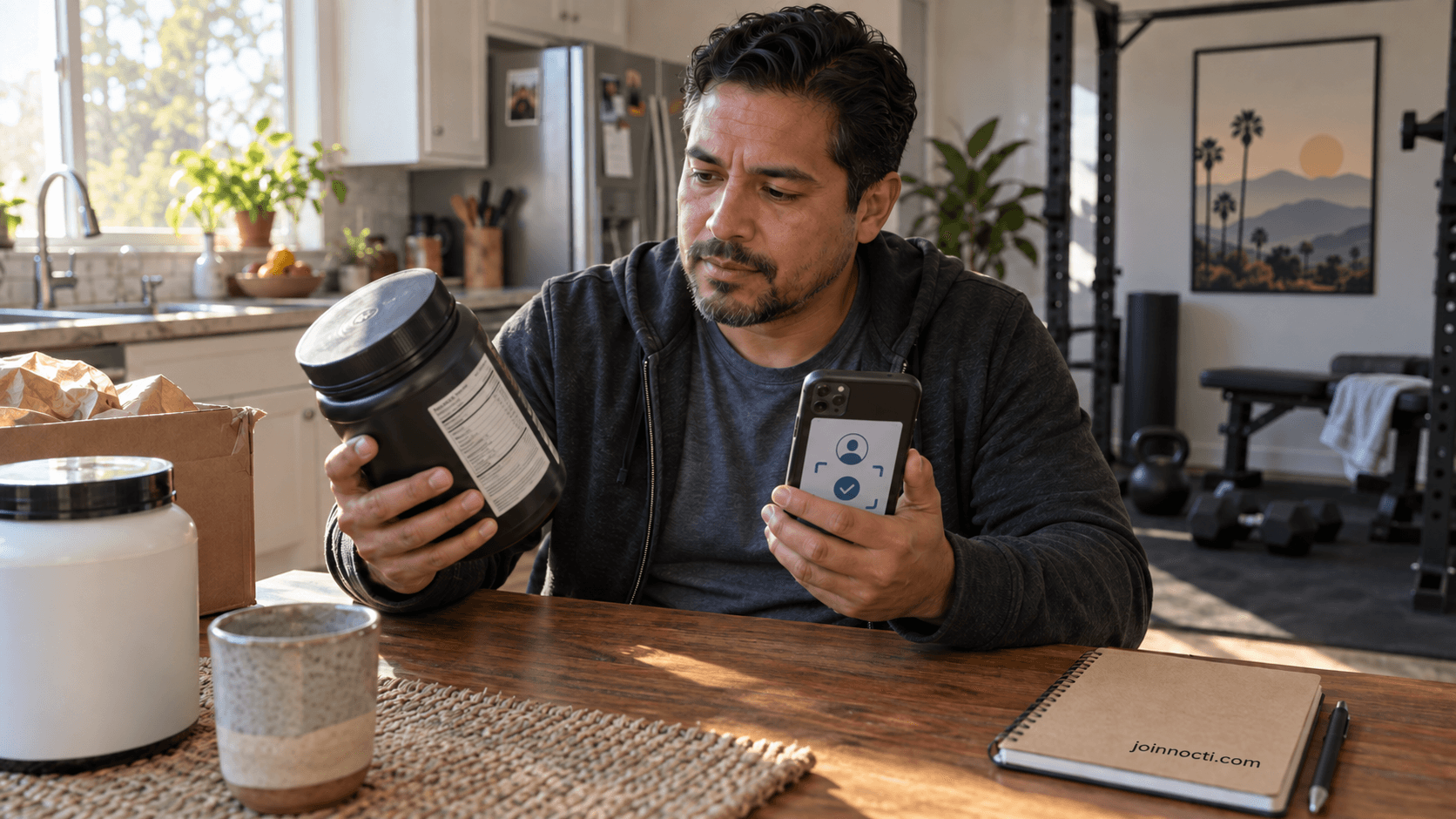
What California changed—and when it starts
Governor Gavin Newsom announced on September 28 that he signed Assembly Bill 2030. The chaptered law prohibits selling, offering for sale or giving away as a retail or wholesale promotion an over-the-counter diet pill or dietary supplement marketed for weight loss or muscle building to a person in California who is under 18, except for the prescription situation stated in the law. AB 2030 is a non-urgency statute with no later operative date in its text. Under the California Secretary of State’s general rule for regular-session statutes, it takes effect January 1, 2027—not on the September 28 signing date. The law also creates age-verification rules for stores and delivery sellers and allows a civil penalty of up to $500 for each violation.
Who this guide is for
This guide is for California parents and guardians, young athletes, coaches, adult shoppers and people who buy supplements online. It answers a narrow question: what should someone check before the under-18 sales restriction begins? It does not decide whether a product is useful, safe or appropriate for one person. An age check is a sales rule, not a medical review, and AB 2030 does not convert a supplement into an FDA-approved treatment. Product choices, possible interactions, eating or body-image concerns and performance goals belong in a private conversation with an appropriate licensed clinician, pharmacist or registered dietitian.
1. Check the date, the buyer’s age and the prescription exception
Write down January 1, 2027, and do not assume a retailer must already apply the new statewide restriction in September 2026. The ban applies to sales or promotional giveaways to people under 18 in California; the text says it does not apply to people 18 or older. It also states an exception for a person under 18 who has a prescription for an otherwise covered over-the-counter diet pill or supplement. Because the law does not turn a general recommendation, coach’s note or social-media message into a prescription, a family relying on that exception should confirm the prescription and exact product with the prescriber and dispensing seller before trying to buy it.
2. Read the marketing and shelf context—not just one ingredient
AB 2030 defines the covered supplement by how it is labeled, marketed or otherwise represented: for weight loss or muscle building. The law says a court may consider product claims and images, how a store or website categorizes or groups the item and certain ingredients, including a steroid, creatine, green tea extract, raspberry ketone, garcinia cambogia or green coffee bean extract. That list is a set of factors, not a declaration that every product containing one named ingredient is banned or unsafe. Save the product page and photograph the front, Supplement Facts panel, ingredient list, claims and store or website category. Those records are more useful than guessing from a tub shape, a fitness influencer or the word “natural.”
3. Know what an in-store or online age check may ask for
The chaptered text includes a valid-identification rule for retail establishments and permits stores to limit access to covered products. Delivery sellers, including online retailers, must not accept an order without either verifying the buyer’s full name, birth date and residential address through a qualifying independent database, requiring an adult age 18 or older to sign for delivery with government photo identification, or using both methods. Before entering personal data, confirm that the web address belongs to the real seller, read its privacy and return terms and do not send identification through an unsolicited text or social-media message. A seller that performs an age check is following a purchase rule; that check does not establish product quality or effectiveness.
4. Check the product and health context separately from the law
Use the exact product name, maker and ingredient list to search FDA’s dietary-supplement pages and medication-health-fraud notifications. FDA says supplements generally are not approved before they reach the market, can have strong effects and may interact with medicines, laboratory tests or surgery. Its current weight-loss notification page warns that products promoted as diet pills, fat burners, supplements or teas may contain hidden ingredients and that the agency’s public list covers only a fraction of suspect products. The National Institutes of Health likewise says most teenagers should not use performance supplements and recommends expert guidance. Bring the container or clear label photos, a medicine list and the intended goal to a clinician, pharmacist or registered dietitian; do not substitute a supplement for prescribed care.
5. Keep the package and use the right response if something goes wrong
If someone has a concerning reaction, stop using the product and seek medical advice. Call 911 for collapse, a seizure, trouble breathing, chest pain, inability to wake or another life-threatening emergency. California Poison Control answers exposure questions at 1-800-222-1222 around the clock; have the container, amount, time taken, symptoms and medicine list ready. After urgent needs are handled, preserve the label, lot or date code, receipt, order page and a factual timeline. FDA accepts dietary-supplement problem reports through its Safety Reporting Portal and says certainty about cause is not required. A report helps regulators evaluate a possible signal, but it does not replace medical care or guarantee a recall.
What should happen next—and where to start
Retailers and delivery sellers have until the January 1 effective date to align their sales and verification processes with the chaptered law. Families do not need to wait to separate three questions: whether AB 2030 covers the product, whether a seller’s age-verification path is legitimate and whether the product is appropriate for the person considering it. Start with the official bill text and status page for the legal scope, then use FDA and NIH resources plus a licensed clinician or pharmacist for product and health questions. NOCTI publishes this guide as general service journalism; it does not sell supplements, verify prescriptions or provide individual medical or legal advice.
Sources
- Governor of California: September 28, 2026 health-legislation signing announcement ↗
- California Legislative Information: chaptered AB 2030 definitions, age-verification rules, exception and penalties ↗
- California Legislative Information: AB 2030 status and September 28 chaptering record ↗
- California Secretary of State: when regular-session statutes take effect ↗
- FDA: dietary-supplement regulation, interactions and consumer safety checks ↗
- FDA: current weight-loss product notifications and hidden-ingredient warning ↗
- NIH Office of Dietary Supplements: exercise and athletic performance supplements ↗
- California Poison Control System: 24-hour Poison Hotline ↗
- FDA: how to report a problem with a dietary supplement ↗
Start with the chaptered California law
Read AB 2030 for the legal scope and effective date, then use FDA and a licensed health professional for product-safety questions.
Read AB 2030