Local Men’s Wellness & Service Trends
California invites comments on heat-rule changes for indoor wellness workplaces
Cal/OSHA is taking comments through September 21 on draft changes to workplace heat rules. Gym, spa and massage employers should separate the proposal from the protections already in effect.
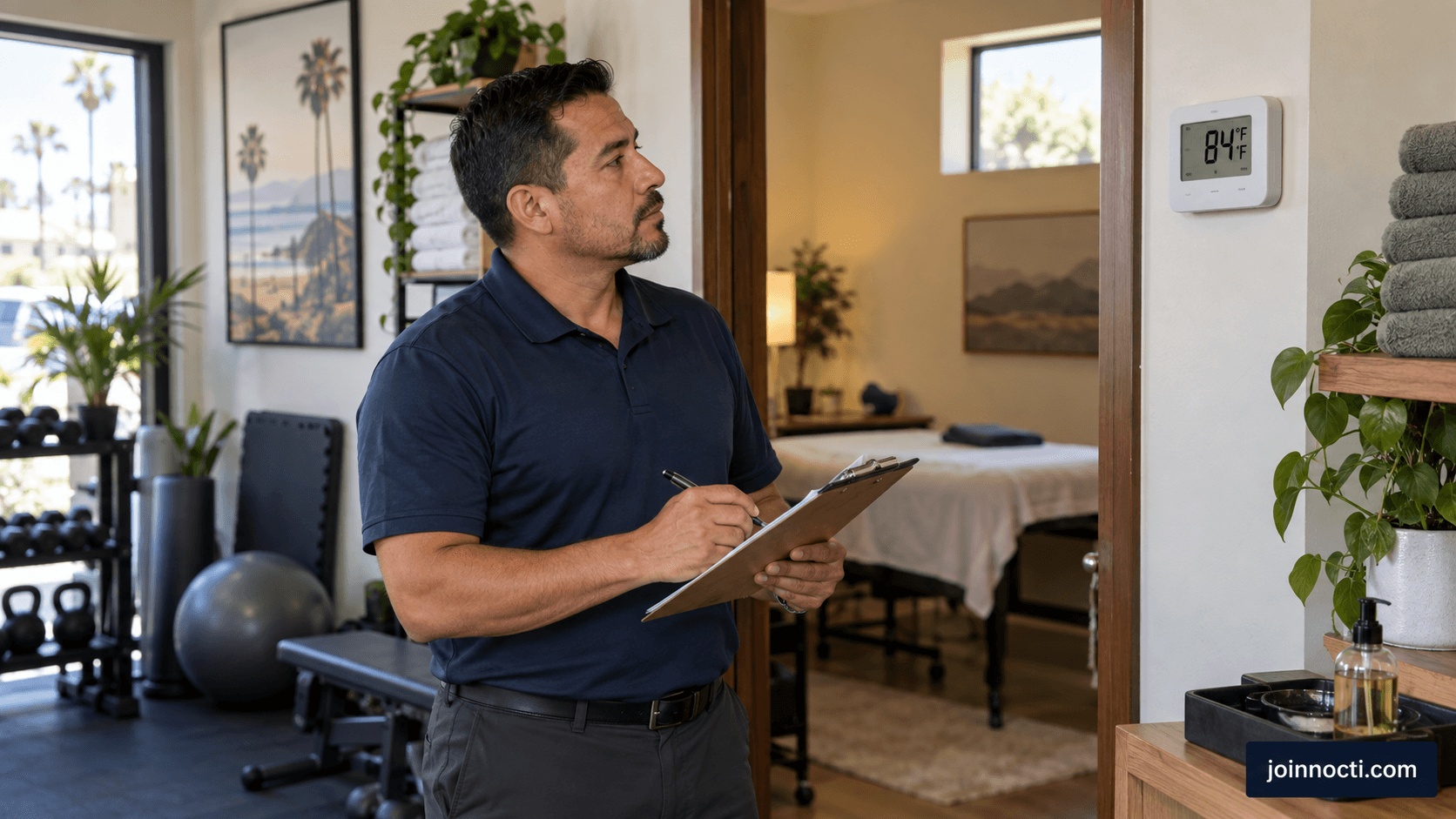
A September 21 deadline puts workplace heat plans back on the calendar
California workplace-safety officials are taking comments through September 21 on an August 14 discussion draft that would revise the state’s indoor and outdoor heat-illness standards. The proposal is relevant to gyms, spas, massage practices and recovery studios because some of those businesses have employees working in enclosed rooms where outdoor heat, limited ventilation, laundry equipment or sustained physical work can raise indoor conditions. The draft is not a final rule. Employers still need to follow the standards currently in force while the state considers what may change.
The current indoor rule begins at 82 degrees in covered work areas
California’s existing section 3396 took effect July 23, 2024 and, with listed exceptions, applies to indoor work areas where the temperature reaches 82 degrees Fahrenheit while employees are present. It requires measures that include drinking water, cool-down areas, training, emergency-response procedures and a written Heat Illness Prevention Plan. Additional assessment and control requirements apply when the temperature or heat index reaches 87 degrees, or at 82 degrees for workers wearing clothing that restricts heat removal or working around high radiant heat. The rule is about employee exposure; a comfortable lobby does not establish the temperature where laundry, training or treatment work occurs.
A wellness business should measure the work area that can actually get hot
The Cal/OSHA FAQ says air temperature should be measured in the immediate area where workers are located, using a thermometer exposed to the air but shielded from radiant heat. When the assessment-and-control provisions apply, the current standard requires temperature or heat-index records with the date, time and specific location. In a mixed-use wellness business, that can mean checking more than the front desk: a sunny training floor, a closed treatment room and a laundry area may not have the same conditions. This article cannot determine whether a particular business or worker falls within an exception; use the official rule for that analysis.
The draft would change how heat plans reach workers
The August discussion draft proposes requiring employers to distribute the written Heat Illness Prevention Plan to new employees upon hire, during heat-illness training and to every employee at least once a year, while saying an employer would not have to distribute it to the same employee more than twice a year. It also presents an online-posting option in English using a format that can be translated. Those are proposed changes, not current publication requirements. The existing indoor standard requires an effective written plan in English and the language understood by most employees and requires that it be available at the worksite.
Returning workers and new hires are a major focus of the proposal
For indoor workplaces meeting the draft thresholds, the proposal would extend acclimatization procedures to an employee returning after more than 14 days away, not only someone newly assigned. It lays out two possible approaches: pre-shift meetings on days requiring close observation, or a staged exposure schedule. Under that second option, a new employee’s heat exposure would rise from no more than 20% of the usual duration on day one to 80% on day four; a returning employee would move from 50% on day one to 80% on day three. The draft includes an exception when the employer can show the person consistently worked in similar conditions during the prior 14 days.
Training would need to be understandable, not merely delivered
The draft says heat training must be provided in a language and at a literacy level each employee understands and that workers must have an opportunity to ask questions. The existing Cal/OSHA FAQ already emphasizes effective communication and training in a language and educational level workers understand. For a wellness workplace, a practical review should cover who checks indoor conditions, where cool-down space and water are located, how an employee requests a preventive rest, what symptoms trigger first aid or emergency help and how a solo worker can reach a supervisor or emergency services. A signed sheet by itself does not show that those procedures work.
Heat symptoms can move beyond the scope of a wellness appointment
The current standard requires an immediate response when a supervisor observes or a worker reports possible heat-illness symptoms. Severe warning signs can include confusion, staggering, vomiting, altered behavior, loss of consciousness or convulsions. Call 911 for a life-threatening emergency. Do not leave a symptomatic worker alone or treat massage, stretching, a sauna, a supplement or a hydration product as emergency care. Customers who arrive dizzy, confused, faint or acutely ill after heat exposure also need appropriate medical help rather than a routine service, even though the workplace regulation discussed here governs employee protections.
What California wellness workplaces can do before the comment period closes
First, read the current section 3396 and the Cal/OSHA FAQ, then compare the August draft line by line instead of treating a social post as the rule. Review whether the written plan matches the actual rooms, schedules, languages and emergency contacts at the workplace. Workers can raise a safety concern with the employer or use Cal/OSHA’s official complaint route; employers can request no-cost consultation assistance from the agency. Anyone commenting on the draft can use the address and September 21 deadline on the Department of Industrial Relations page. This is educational reporting, not legal advice, and NOCTI does not inspect workplaces, decide employee status or replace Cal/OSHA, emergency services or qualified legal counsel.
Sources
- California Department of Industrial Relations: August 14, 2026 heat-standard discussion draft and September 21 comment deadline ↗
- Cal/OSHA: August 14, 2026 draft language for sections 3395 and 3396 (DOCX) ↗
- California Code of Regulations, Title 8, section 3396: current indoor heat standard ↗
- Cal/OSHA: indoor heat-illness prevention FAQ, current thresholds and employer duties ↗
- California Legislature: AB 2243 chaptered text and rulemaking direction ↗
- Cal/OSHA: indoor heat resources for employers and workers ↗
- Cal/OSHA: how workers can file a workplace-safety complaint ↗
- Cal/OSHA Consultation Services: no-cost assistance for employers ↗
Find men's massage near you
Compare local providers privately and contact the professional you choose directly.
Search NOCTI