California HIV Care & Medication Support
HIV care should not feel impossible: how California ADAP can help
California ADAP can help eligible residents pay for HIV medication and, in some cases, insurance costs. Here is a calm, practical guide to benefits, enrollment and taking treatment safely.
A benefit program—not a judgment
A new HIV diagnosis, a lost insurance plan or a high pharmacy bill can make the next step feel larger than it is. California’s AIDS Drug Assistance Program, usually called ADAP, exists to help eligible residents get and stay connected to treatment. It is not a test of character, and needing help with medication costs is not a treatment failure. The useful first move is to speak with a certified ADAP enrollment worker before a prescription gap begins. This guide explains the official program in plain language; it does not decide an individual’s eligibility or replace medical advice.
What California ADAP may pay for
The California Department of Public Health says ADAP can provide eligible clients with FDA-approved medications used to treat HIV and prevent or treat related opportunistic infections. Its broader Office of AIDS Health Insurance Premium Payment programs may also help some eligible people with private insurance premiums and certain outpatient medical out-of-pocket costs, while a Medicare assistance program may help with certain Part C or Part D costs. The exact benefit depends on eligibility, current coverage, the medication and the live formulary. Do not assume a drug or bill is covered from a social post or an old list—ask the enrollment worker and pharmacy to verify it.
The 2026 formulary expanded—but it still has rules
California announced an open-formulary model effective January 1, 2026. CDPH says the program now includes all FDA-approved medications except selected exclusions based on safety or cost, expanding beyond HIV medicines to many drugs used for common chronic conditions. That is meaningful support for people managing more than one health issue, but “open formulary” does not mean every product, brand, dose or claim will be paid automatically. Check the current ADAP formulary and any required steps before filling or changing a prescription. A clinician—not a benefits article—decides which treatment is medically appropriate.
Who may qualify in California
CDPH lists four core requirements: California residency, an HIV or AIDS diagnosis, age 18 or older, and modified adjusted gross income at or below 600% of the federal poverty level for the household. The program also says applicants must not be fully covered by Medi-Cal or another third-party payer. The 2026 income chart directs people at lower income levels to check possible Medi-Cal eligibility, so income alone does not answer the whole question. Household size, coverage and current documents matter. Use the live 2026 chart and let a certified worker review the situation rather than deciding you will be rejected before applying.
A certified enrollment worker is the practical starting point
Only a certified enrollment worker can enroll someone in California ADAP. The state’s resources page includes an enrollment-site locator and worker directory. Expect to document identity, California residency and income and to complete current consent and attestation forms; acceptable documents and timing rules are listed on the live CDPH checklist. California’s ADAP call center is 844-421-7050, Monday through Friday from 8 a.m. to 5 p.m., excluding state holidays. CDPH says clients re-enroll annually before their birthday month and may begin up to 45 days early. Report relevant income or residency changes instead of waiting for the next renewal.
Taking HIV medicine correctly should fit real life
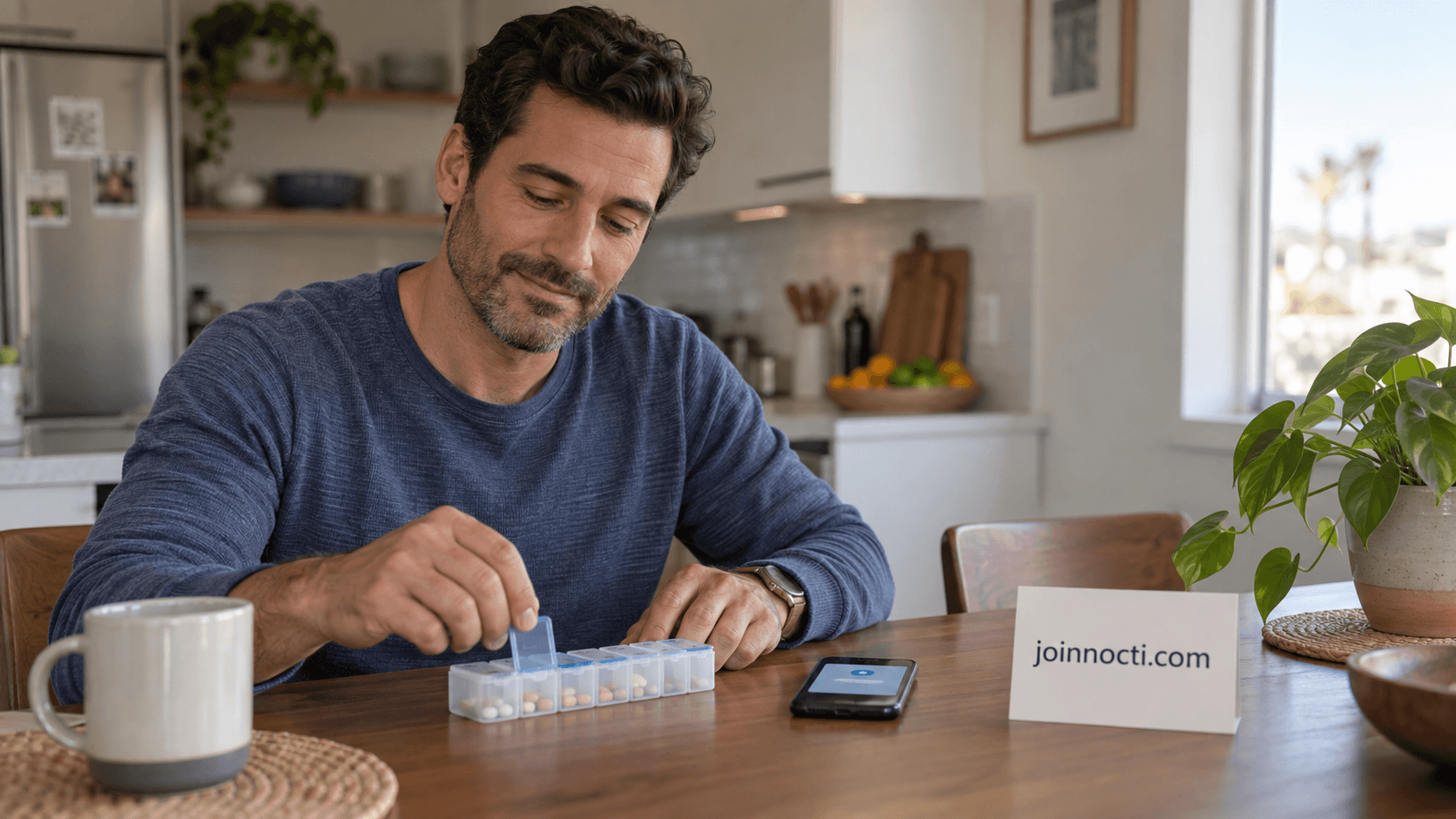
HIV treatment works best when it is taken exactly as prescribed. NIH recommends telling the care team about anything that makes that difficult—including cost, side effects, trouble swallowing, transportation, an unstable schedule, housing concerns or fear of judgment. Those are problems to solve, not reasons to hide. Ask for written, regimen-specific instructions; keep an up-to-date list of prescriptions, over-the-counter medicines, vitamins and supplements; use a weekly pill box, phone alarm or diary if helpful; and request refills before the supply runs out. Some medicines have food, timing or interaction instructions, so the prescription label and care team come before generic advice.
A missed dose or side effect is a conversation—not a failure
Do not stop HIV medicine, change the dose or combine products on your own because of cost, side effects or one missed dose. NIH’s general guidance says a missed dose is usually taken when remembered unless it is almost time for the next dose, and not to double a dose—but individual regimens can have different instructions. Follow the label and contact the prescribing clinician or pharmacist when unsure. Most treatment side effects can be managed, and a care team can evaluate whether another option is better. If money or coverage is the barrier, contact the enrollment worker before the medicine runs out.
Undetectable can replace fear with a plan
Modern HIV treatment allows people with HIV to live long, healthy lives. When treatment brings the viral load down and keeps it undetectable, HIV.gov says the person will not transmit HIV through sex—known as Undetectable = Untransmittable, or U=U. Undetectable does not mean cured, and it does not prevent other sexually transmitted infections. Keep taking treatment and complete viral-load monitoring on the schedule set by the care team. If a result becomes detectable or doses have been difficult, contact the clinician promptly; it is a reason to adjust the plan, not a reason for shame.
Save the contacts before a gap happens
Keep three contacts where they are easy to find: the prescribing clinic, the dispensing pharmacy and the ADAP enrollment worker. Ask which person handles refills, prior authorization, insurance changes, travel supplies and renewal deadlines. HRSA’s Ryan White HIV/AIDS Program can also connect eligible people who are uninsured or underinsured with medical and support services, and HIV.gov’s locator can search by ZIP code. NOCTI is not an ADAP enrollment site, pharmacy or medical provider. It publishes this guide so a private search can lead to an official next step instead of more fear.
Sources
- California Department of Public Health: ADAP eligibility, covered assistance and call-center information ↗
- California Department of Public Health: 2026 ADAP federal poverty guideline chart ↗
- California Department of Public Health: 2026 open-formulary announcement ↗
- California Department of Public Health: OA-HIPP premiums and outpatient medical cost assistance ↗
- California Department of Public Health: enrollment locator, worker directory and formulary resources ↗
- California Department of Public Health: acceptable ADAP supporting-document checklist ↗
- NIH HIVinfo: following an HIV treatment regimen and responding to missed doses ↗
- NIH HIVinfo: HIV medicines and side effects ↗
- HIV.gov: viral suppression, healthy living and Undetectable = Untransmittable ↗
- HRSA Ryan White HIV/AIDS Program: medical care, medication and support services ↗
Find official HIV care and treatment services
Use the federal HIV.gov locator to search by ZIP code for HIV care, treatment and support services.
Open the HIV.gov locator