Industry Watch / Professional Standards
That $10 Shoulder Massage Could Cost Your Salon More Than You Think
An innocent add-on, a happy customer and a licensing rule nobody thought to check. In California, the line between beauty, wellness and regulated care can depend on the credential, the procedure and even the part of the body involved.
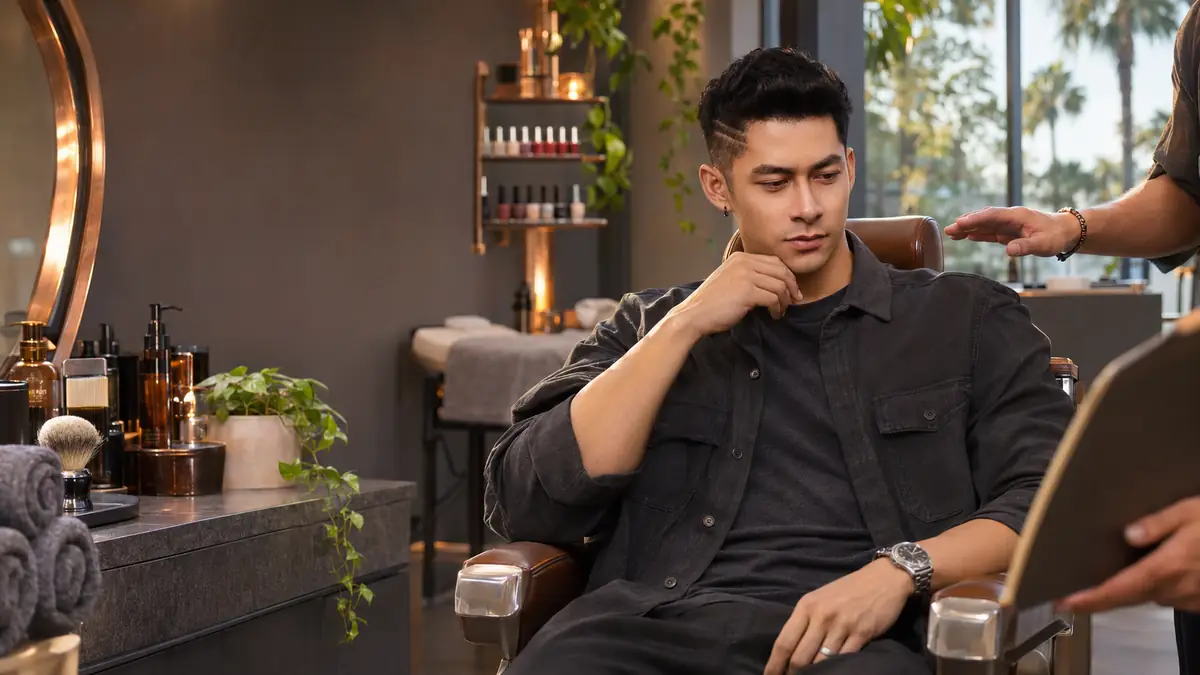
A small add-on can raise a larger question
A customer comes in for a manicure. Halfway through the appointment, she asks if someone can work on her shoulders for a few minutes.
The technician agrees. Five minutes, five dollars. Maybe ten minutes for ten. The customer leaves happy, the technician earns a little extra and the salon has another add-on to promote. Nobody sees a problem—until someone asks whether that technician was legally allowed to provide the massage in the first place.
A recent Vietnamese-language video circulating among nail professionals warns about a salon allegedly being fined after workers performed neck and shoulder massages without the appropriate authorization. NOCTI has not independently verified that enforcement incident. The licensing issue behind the warning is still worth examining, because it reaches barbers, estheticians, massage therapists, personal trainers and businesses trying to offer more services under one roof.
A manicure license has defined limits
California defines manicuring to include massage and other specified work from the elbow to the fingertips and from the knees to the toes. The neck and shoulders are not within that manicurist authorization.
A customer request, years of informal experience or a small charge on the bill does not expand a credential. Professional licensing is organized around defined activities, training and consumer protection—not around whether a service feels minor.
The conclusion is specific to the credential. California's esthetics scope is broader and can include massage of the neck and upper part of the body when it is performed as a noninvasive skin-care service within the esthetician's authorized scope. That does not authorize medical treatment or unrestricted therapeutic bodywork. In one salon, two people at neighboring stations can legally have different boundaries.
The barbershop has its own version of the problem
Men increasingly expect a barbershop visit to include more than a haircut: a hot towel, facial care, a scalp massage or another quiet finishing touch. California barbers may provide facial and scalp massage within the statutory practice of barbering.
That authority should not be read as a general authorization to provide therapeutic or full-body massage. A scalp massage and a treatment promoted for shoulder pain or muscle recovery are not automatically the same service under the law.
The distinction matters when a shop builds a premium package around pain treatment, rehabilitation or specialized bodywork. A good referral is not a missed sale. It is a sign that the business understands where one professional role ends and another begins.
When skin care starts sounding like medicine
Modern facial menus can include cleansing, exfoliation, chemical peels, LED treatments, microneedling, lasers and services marketed as rejuvenation. They do not all sit under one legal authority.
California estheticians may perform noninvasive services within their cosmetic skin-care scope. Lasers, IPL, injections, medical-level dermabrasion and skin peels, and procedures that penetrate or destroy living tissue may fall within medical practice and are not authorized by an esthetician license alone. Working under a doctor's roof does not by itself expand a Board of Barbering and Cosmetology license.
A manufacturer certificate can show that someone completed a course. It does not necessarily grant legal authority to perform the procedure. The device being easy to buy, popular online or described as cosmetic does not answer the licensing question.
Eye masks and LED need the same discipline as any other add-on
Salon owners are understandably interested in services that may improve the appointment without adding much hands-on time. An eye mask still raises questions about ingredients, sanitation, allergies, contraindications and correct use.
LED deserves more precision. California Board guidance identifies certain LED devices, when properly used by licensed cosmetologists or estheticians within their skin-care scope, as equipment that may not constitute an invasive procedure. The Board does not approve individual devices. Its guidance does not extend an esthetician's authorization to a manicurist or another license type.
Wavelength, current, intended use, treatment claims and the operator's license can all matter. A salon should check those points before buying the machine, writing the menu copy or accepting payment.
Massage professionals have boundaries too
California does not issue a conventional statewide massage therapist license. The California Massage Therapy Council provides voluntary certification recognized by state law, although some cities and counties require CAMTC certification or local authorization. Massage businesses can also face local business, zoning and operating rules.
CAMTC certification does not itself confer authority to practice medicine or physical therapy. Providers should avoid representing massage as medical diagnosis or licensed physical rehabilitation unless they separately hold the credential that authorizes that care.
Massage can support relaxation, comfort and general wellness. Persistent pain, suspected injury and a diagnosed condition may require a different professional. Clear language about what the provider does—and does not do—protects both sides.
Personal trainers face a related boundary
A client arrives at the gym with lower-back pain and asks a trainer to fix it. A knowledgeable trainer may adapt exercise, discuss general movement and recommend an appropriate clinical evaluation.
A private personal-training certification may document education in exercise coaching. It does not authorize someone to hold themselves out as a physical therapist or provide services reserved to a licensed health-care profession. Exercise coaching within a trainer's competence, medical diagnosis and licensed physical-therapy care are separate matters.
Terms such as corrective exercise, rehabilitation and recovery can blur that distinction. The useful question is not whether the marketing sounds clinical. It is what the provider is actually evaluating, promising and doing.
Mobile service adds another layer
Permission to perform a service in a licensed establishment does not automatically mean it can be performed in every home, office or hotel.
California's Personal Service Permit allows qualifying barbers, cosmetologists, estheticians and manicurists to perform only specified services outside a licensed establishment. Holding the underlying professional license alone is not enough, and the permit does not authorize every service within that license's ordinary establishment-based scope.
Massage operates under a different state-and-local structure. Independent providers offering both studio and mobile appointments should confirm the rule for the service, the setting and the city before the first booking.
Five checks before a service goes on the menu
First, read the current scope of your credential. Do not rely on what the business next door appears to be doing.
Second, look at the actual procedure rather than its marketing name. Calling something relaxation or recovery does not change the physical acts involved.
Third, confirm where it can be performed. Establishment rules and mobile-service rules may differ.
Fourth, check sanitation, equipment instructions, contraindications, insurance coverage, documentation and informed consent.
Finally, review every promise. Cosmetic improvement, relaxation, general wellness and medical treatment are not interchangeable claims. When the answer remains unclear, ask the relevant regulator before publishing the service—not after a complaint.
What customers should take from this
A barbershop offering a scalp massage is not automatically doing something wrong. An esthetician offering an eligible LED skin-care service is not necessarily outside scope. A massage therapist does not need to be a physician to provide a legitimate massage.
The question is whether the particular professional is appropriately authorized for the particular service, in that setting, and whether the service is described accurately.
Customers can ask what a treatment includes, its purpose, which credential the provider holds and what result is realistic. A professional who explains a limitation is demonstrating judgment, not weakness.
A better business does not need to offer everything
Beauty and wellness businesses are changing quickly. Barbershops are becoming grooming destinations. Facial studios are expanding menus. Massage therapists are developing recovery-focused offerings. Trainers are building broader wellness programs.
Those changes create real opportunities. They also make professional boundaries easier to blur. Innovation still needs training, an accurate description, appropriate authorization and a safe setting.
Sometimes the right answer is yes. Sometimes it is a referral. Sometimes it is simply, “That is not a service my license covers.” The $10 add-on may be easy to sell. Knowing whether it belongs on the menu is the more valuable skill.
Editorial note
This article provides general educational information, not legal advice. It focuses primarily on California and was reviewed against the official sources below on November 19, 2026. Laws, regulations, local requirements and agency guidance can change. Providers should confirm current obligations with the authority that governs their credential, business and location before adding a service.
Sources (9)Read moreRead less
- California Board of Barbering and Cosmetology — 2026 Barbering and Cosmetology Act and Regulations
- California Board of Barbering and Cosmetology — 2026 Sunset Review Report
- California Board of Barbering and Cosmetology — Skin Care Machines/Devices bulletin
- California Board of Barbering and Cosmetology — Personal Service Permit Q&A
- Medical Board of California — Cosmetic Treatments FAQs
- Medical Board of California — Medical Spas guidance
- California Massage Therapy Council — Certification FAQs
- California Massage Therapy Council — California Massage Law overview
- Physical Therapy Board of California — Laws and Regulations reference guide
A clear boundary is part of good service.
Before adding a treatment, confirm the current rule with the authority that governs your credential, location and business. Customers can ask what the service includes and which credential authorizes it.
Read NOCTI Professional Standards