Groom Journal / Hair & identity
Long hair. His own terms.
Freedom, masculinity, attraction. A closer look at the stories we attach to a man’s hair.
- What the research can tell us
- How taste becomes a social judgment
- Choosing a look on your own terms
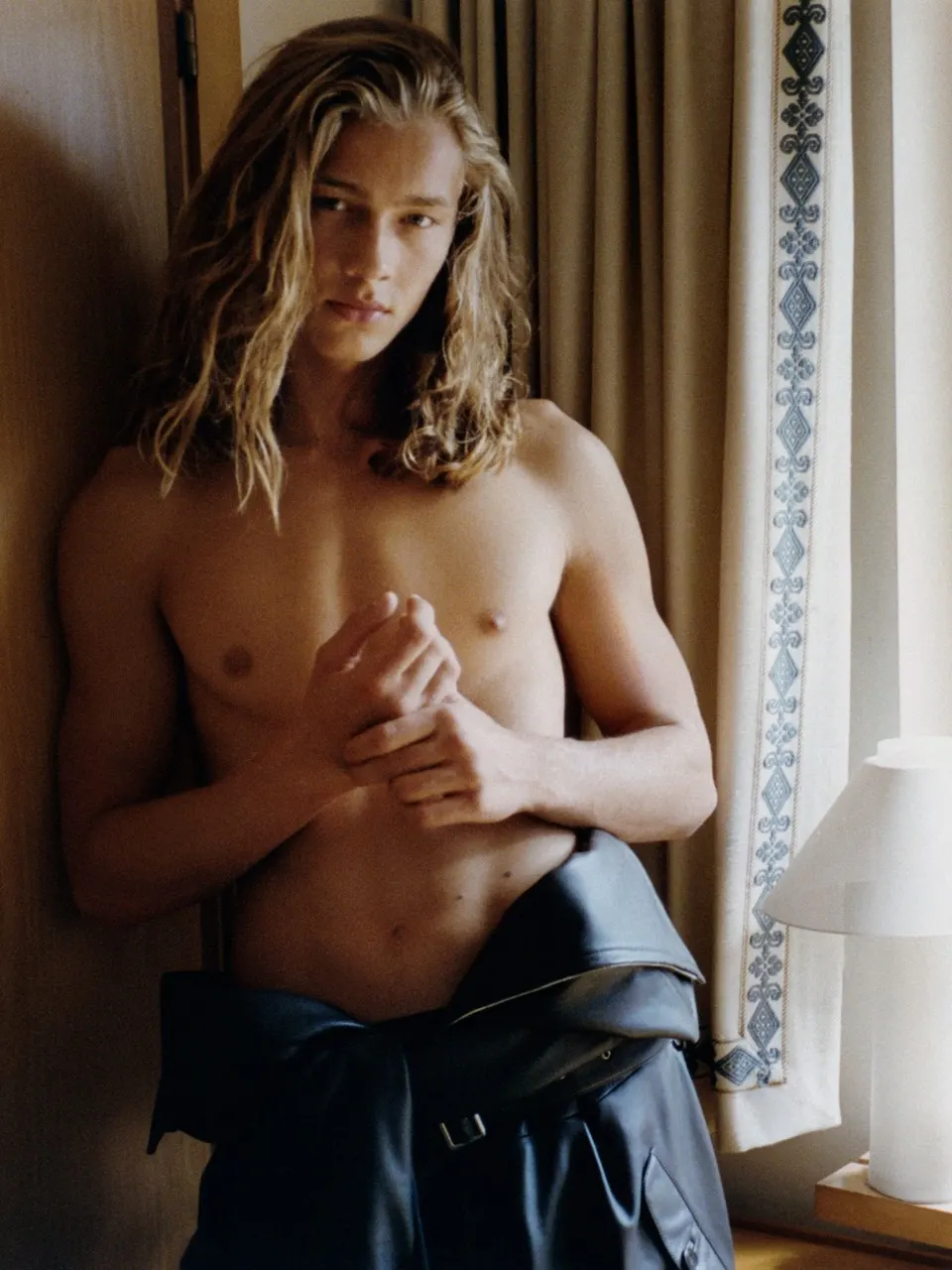
Fashion portraits supplied for this feature. The photographs do not depict the research.
View photo story →A man can change his haircut and find himself answering questions about his entire personality. Is he making a statement? Is he rebelling? Does it make him less masculine? A short haircut rarely has to pass the same interview.
Sometimes long hair is a statement. Sometimes it belongs to a faith, a music scene or a chapter of someone’s life. Sometimes a man simply likes how his hair falls around his face. The interesting question is not whether every choice has a hidden explanation. It is why we expect one.
This feature separates three things that are easily confused: what someone likes, what they want to express, and what an observer assumes. Research can help us understand those assumptions. It cannot read a person from a photograph.
A haircut can be personal without being a personality test.
In a 2011 qualitative study, sociologist Rosemary Ricciardelli interviewed 14 Canadian men about hair, appearance and self-identification. Hair emerged as part of how these men understood themselves and their appearance. The small interview sample offers insight into experience; it does not establish a universal long-haired personality.
That distinction matters. Feeling more at home with longer hair is a meaningful personal experience. It does not prove that long-haired men are more confident, more rebellious or more emotionally complex than anyone else. The same look can carry different meanings for different people.
For one person, growing it may feel like reclaiming a decision that parents or a school once made for him. For another, the appeal is entirely visual: the curl finally falls the way he wants. These are possibilities to ask about, not explanations to assign from a distance.
The judgment often tells us about the person looking.
Peterson and Curran’s 1976 study asked 90 American female college students to rate male images with different hair lengths. Short-haired men received more favorable ratings and were seen as closer to the male stereotype; preferences also varied with the observers’ outlook. It is evidence of judgments in a particular historical sample, not a ranking of men’s actual qualities or today’s dating preferences.
Calling someone “less professional” or “less masculine” because of a hairstyle turns a visual preference into a claim about character. A viewer can have a preference. That preference still cannot establish someone else’s competence, maturity or ability to care for people.
A 2026 review by Colette Van Laar and colleagues takes a broader social-identity perspective on men’s lives. It emphasizes the role of audiences: who is watching can shape how men respond to social expectations. It is not a study of hair length. Applying that idea here is an editorial interpretation: an appearance choice can feel different around family, a partner or colleagues.
How appearance becomes a social signal.
Parent and colleagues analyzed written accounts of gender beliefs from 366 young women and 289 young men in the United States. Long hair appeared among descriptions of what other young adults consider feminine. Published online in 2019 and in Gender Issues in 2020, the study documents cultural associations; it does not establish that a long-haired man has feminine personality traits. A stereotype about a hairstyle is not a measurement of the person wearing it.
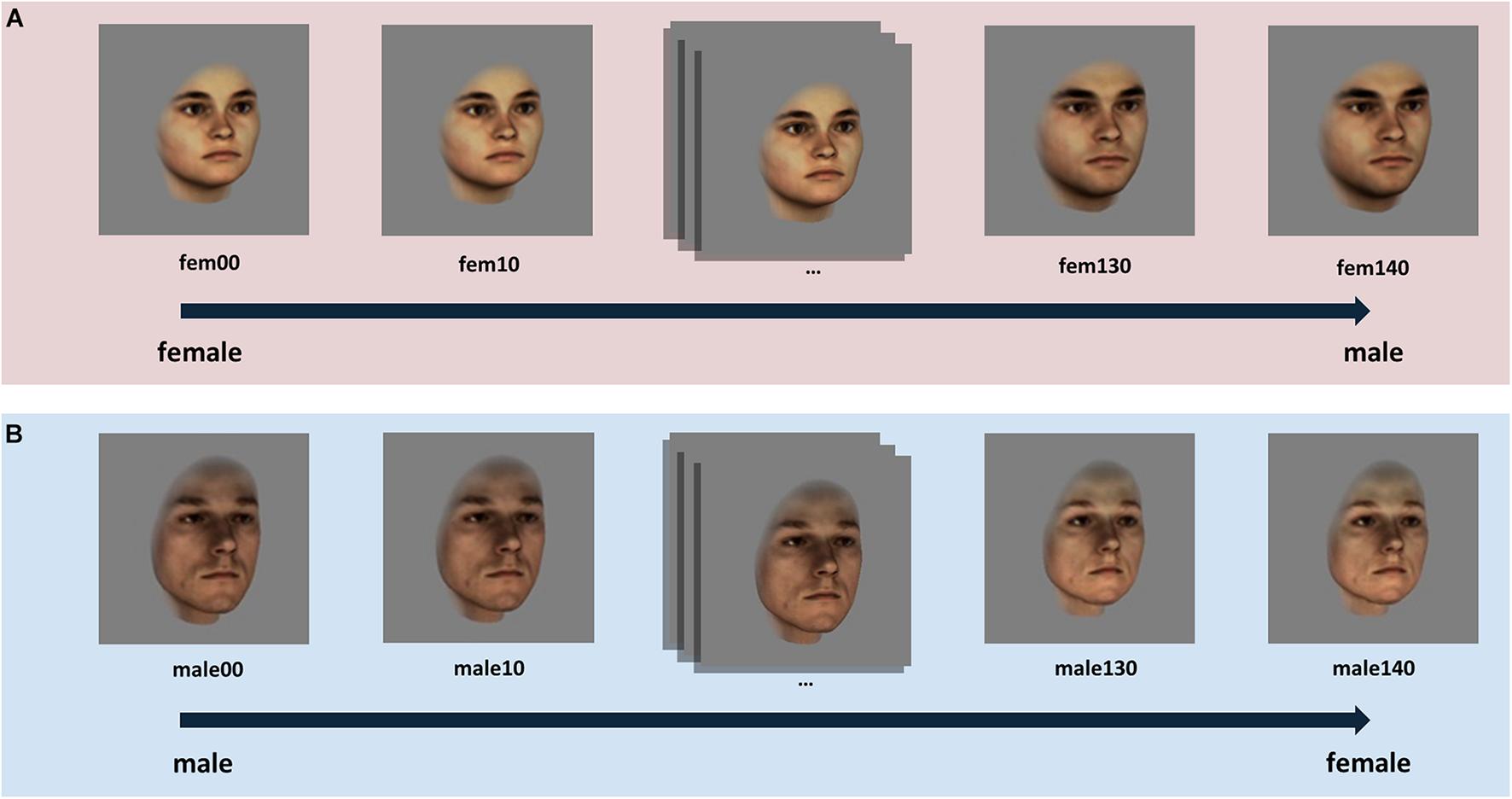
A 2021 study by Teresa Luther and colleagues used digitally morphed faces to investigate perceived sex categorization and the role of the perceiver. Crucially, the hair was cropped at the hairline in the experimental images. This study cannot tell us whether long-haired men are more attractive or what motivates them to grow their hair.
The original figure below shows the image manipulation. It belongs to a controlled perception task, not a test for identifying a real person’s gender identity or sexual orientation. Keeping that boundary visible is part of reading research responsibly.
Five reasons, without one grand explanation.
In the r/FierceFlow discussion “What inspired you to have long hair?”, people describe influences as different as fantasy characters, metal music, enjoying their curls, avoiding disappointing haircuts and feeling more like themselves. These are individual accounts, not a checklist of traits shared by men with long hair.
Personal freedom. Choosing a length for yourself can feel significant if someone else has always set the rules. The choice may be about autonomy rather than opposition.
A look that feels right. A man may prefer the movement, texture or silhouette of longer hair. Enjoying a look does not require a deeper psychological reason.
Culture and belonging. Music, style communities and religious practice can give hair meaning. The Sikh Coalition describes uncut hair, or kesh, as part of Sikh religious identity. It should not be reduced to a fashion trend or assumed to mean the same thing for every Sikh person.
A personal history. Hair takes time to grow. Someone may connect that time with a transition, a memory or simply the satisfaction of staying with a choice. Being attached to it is not, by itself, a sign of a psychological problem.
Ordinary preference. Some men like having more styling options; others dislike frequent haircuts. A practical explanation can be the whole explanation. Ask the person rather than treating the haircut as a clue to decode.
Attraction does not have a universal haircut.
Two public r/askgaybros threads — “Is long hair a big turn off for you?” and “Is long hair a turn-off for most men?” — contain both enthusiasm for long hair and a clear preference for short hair. Other replies focus on the overall look or how the hair is cared for. These comments illustrate disagreement. They are not a representative survey of gay men, and votes do not turn them into one.
The same care is needed when comparing gay and straight men. An online thread cannot stand in for either group. Nothing about a person’s hair length allows us to identify their sexual orientation or gender identity.
If you are choosing a style for dating, there is no haircut that makes everyone your audience. It can be more useful to ask whether you enjoy the look, feel comfortable wearing it and want the upkeep. Someone’s dislike is a preference, not a diagnosis of you.
Long or short: choose the routine as well as the look.
The useful comparison is not a contest over which length makes a better man. Think about your texture, the finish you want, the time you enjoy spending on it and the kind of appointments you want to maintain.
Long hair can offer options for tying, layering or wearing it loose. Short hair can make a simpler silhouette appealing. Either can require styling; neither automatically makes a person tidy or untidy. A consultation should leave room for your actual habits, not an imagined version of your morning.
| Consider | Longer hair | Shorter hair |
|---|---|---|
| Styling | Room for loose styles, ties and layers. | A different shape; styling still depends on the cut. |
| Upkeep | Think about detangling, drying and your preferred finish. | Think about styling and how often you want the shape refreshed. |
| Attraction | Depends on the person looking. | Depends on the person looking. |
| Character | Cannot be measured by hair length. | Cannot be measured by hair length. |
A trend is a signal, not a rule.
Pinterest’s September 9, 2026 men’s trend report records increased searches for soft wolf cuts, modern mullets and shaggy haircuts. The figures below are changes in Pinterest search activity. They do not tell us what percentage of men wear these styles, whether people booked a haircut, or which style is objectively more attractive.
Use an inspiration feed to find shapes and textures you like. Then take those references to a professional who works with your hair type. A photograph can begin a conversation; it does not have to become a standard you must match.
- Soft wolf cut men+1,154%
- Modern mullet men+223%
- Shaggy haircut men+79%
Pinterest internal search data for global male Pinners, May–June 2025 compared with May–June 2026. Search growth, not the share of men wearing each style. Report published September 9, 2026.
What if everyone has an opinion?
In “Thoughts on guys with long hair?” on r/MenAskWomen, the poster says an ex-partner mocked his hair, even though he likes it and takes care of it. Several replies express attraction to long hair. The contrast is useful: one partner’s criticism does not tell us what everyone else thinks. Nor can a self-selected comment thread speak for all women.
Comments about looking “too feminine” can make a simple preference feel like something that needs defending. A person may laugh it off, feel hurt, change their look or keep it. Those responses should not be read as proof of strength or weakness.
It may help to separate three questions: Do I like my hair? Is there a practical issue I want to solve? Am I changing it mainly to escape somebody else’s judgment? The answers can lead to different choices. You do not owe everyone a personal explanation.
A clear line can be enough: I like wearing my hair this way. If you want a change, make it yours. If you want to keep it, a stylist can help you make the growing-out stages more manageable without replacing your goal with theirs.
The hair can tell a story. Let him tell it.
Some men grow their hair for a particular look. Others carry culture, memory or a sense of freedom in it. Some simply prefer not to cut it. There is room for all of those answers, including no elaborate answer at all.
We can be curious about a person’s style without treating it as evidence of their worth. Kindness, responsibility and how someone treats people cannot be measured in inches of hair.
Perhaps the more useful question is not why a man needs long hair, but why he should need permission to enjoy it.
20 questions to keep the conversation going
Editorial prompts, not a ranking of Internet searches.
- Why do some men prefer long hair?
- Can a haircut express identity without defining personality?
- What makes a hairstyle feel like your own?
- When is growing your hair a choice about autonomy?
- Why can cutting long hair feel emotionally significant?
- Who taught us what a masculine haircut looks like?
- How do family expectations affect style?
- Why does the same hairstyle read differently across communities?
- When does a preference become an unfair judgment?
- How can a workplace discuss grooming respectfully?
- Does a partner’s preference need to become your decision?
- What matters more to you: length, texture or the overall look?
- How do dating apps change the way we judge hair?
- How can we discuss attraction without speaking for everyone?
- Can you enjoy a style that some people dislike?
- What would make the growing-out phase easier?
- How much styling do you want to do each morning?
- What should a stylist know before changing your length?
- How do you choose inspiration that suits your texture?
- What would you wear if nobody asked you to explain it?
About this article
This is an editorial review, not a new study or a psychological assessment. Sources were checked November 17, 2026. Small samples, historical experiments and self-selected online comments cannot establish what all men think. The model photographs are style illustrations, not interviews or evidence about the person pictured.
The public discussion below illustrates different opinions; it does not represent all men. No population hairstyle estimates or diagnosis based on appearance are claimed.
Sources (11)Read moreRead less
- Ricciardelli (2011): Masculinity, Consumerism, and Appearance: A Look at Men’s Hair
Qualitative interviews with 14 Canadian men; publisher abstract checked.
- Peterson & Curran (1976): Trait Attribution as a Function of Hair Length
90 American female college students; historical perceptions, not current population preferences. Publisher summary checked.
- Van Laar et al. (2026): Men’s Self and Identity and Their Relations to Others in a Changing World
Annual Review of Psychology 77, 423–449. Review published in advance September 3, 2025; volume January 2026. Abstract checked; not a hair-length experiment.
- Luther et al. (2021): Male or Female? Influence of Gender Role and Sexual Attraction on Sex Categorization of Faces
Frontiers in Psychology 12:718004. Experimental hair was cropped at the hairline; this is a perception task, not evidence of a long-haired personality.
- Sikh Coalition: Identity
Community explanation of the five articles of faith, including kesh.
- Reddit: Is long hair a big turn off for you? (September 1, 2024)
Public, self-selected discussion. Used to illustrate varied opinions, not prevalence. No usernames or personal photographs reproduced.
- Pinterest: The intentional man, 2026 Men’s Trend Report (September 9, 2026)
Global male Pinners, May–June 2025 compared with May–June 2026 (report footnote 8). Search growth is not hairstyle prevalence or an attractiveness rating.
- Parent et al. (2020; online 2019): An Inductive Analysis of Young Adults’ Conceptions of Femininity and Masculinity and Comparison to Established Gender Inventories
Written accounts from 366 young women and 289 young men in the U.S.; an analysis of reported gender beliefs, not a personality test based on hair.
- Reddit: What inspired you to have long hair?
Public, self-selected accounts of personal inspiration; not a representative sample or evidence that one motive applies to everyone.
- Reddit: Is long hair a turn-off for most men?
Public, self-selected discussion about hairstyle preferences; no population estimate is inferred.
- Reddit: Thoughts on guys with long hair?
One personal account and voluntary replies; neither the poster nor the commenters represent all men or women.